


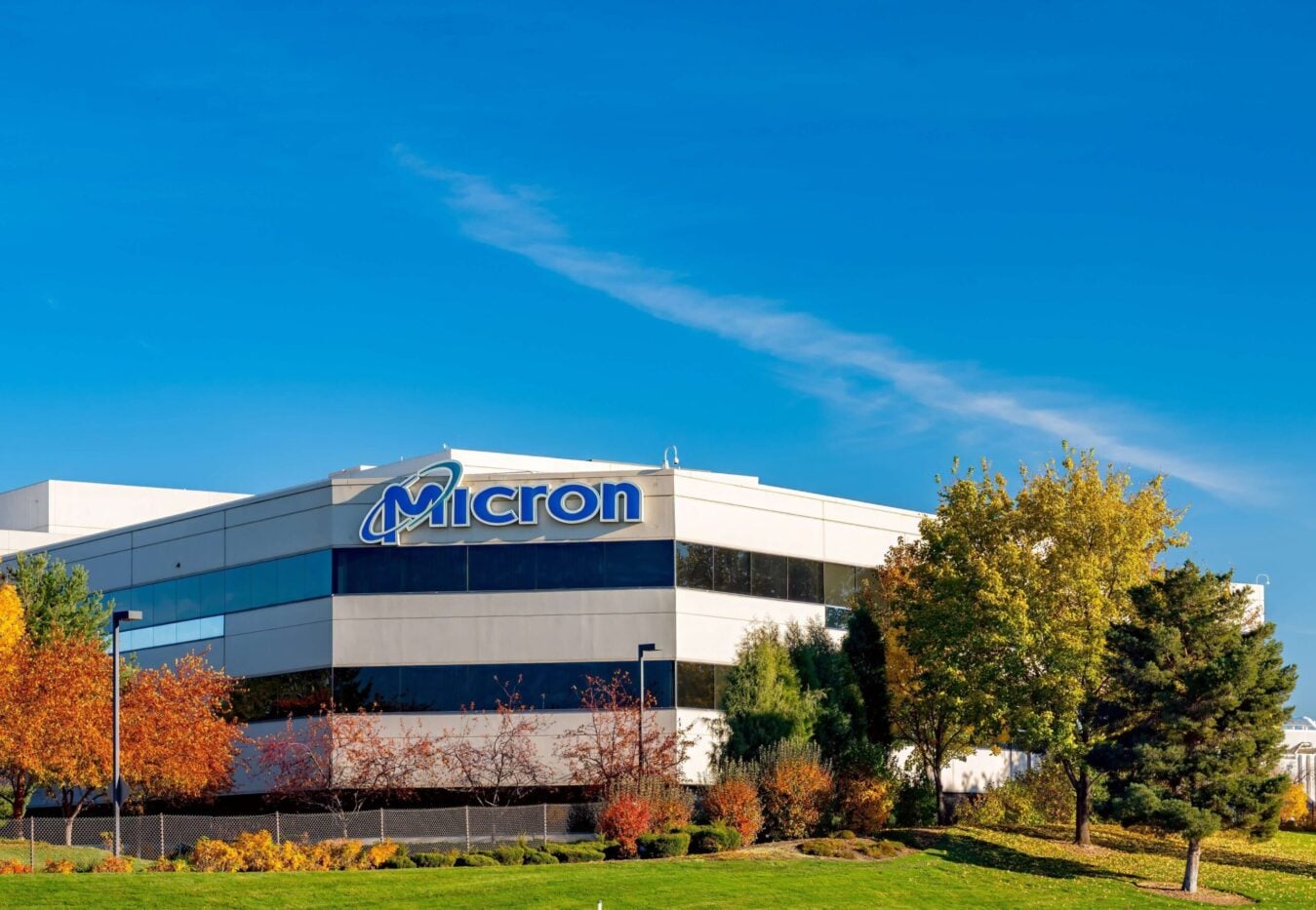
Key Takeaways
- Micron achieved a $1 trillion valuation momentarily on May 26 following UBS’s price target increase to $1,625 — representing the most aggressive forecast among 46 Wall Street firms tracking the company.
- Shares surged 17.4% that session, extending gains to over 220% year-to-date and a remarkable 830% over the trailing twelve months.
- Second quarter fiscal results showed revenue climbing nearly threefold to $23.86 billion, while adjusted earnings per share of $12.20 crushed expectations of $9.19.
- The company’s entire 2026 allocation of HBM (high-bandwidth memory) has been fully committed, with next-generation HBM4 production already underway for Nvidia’s upcoming Vera Rubin architecture.
- Analyst consensus leans heavily toward “Strong Buy,” with firms pointing to constrained AI memory availability that may extend into 2027.
Micron achieved a landmark valuation that caught many market watchers off guard when it briefly surpassed $1 trillion in market capitalization on May 26. Shares rocketed 17.4% to close at $881.60, after touching a 19.3% intraday peak, following UBS’s decision to nearly triple its price objective from $535 to $1,625.
This figure stands as the most optimistic projection among the 46 investment firms actively monitoring the semiconductor manufacturer.
The surge represents the culmination of an extraordinary performance period. Micron shares have skyrocketed more than 220% since the beginning of the year and climbed over 830% across the past twelve months, fueled by exceptional quarterly results, constrained supply conditions, and surging AI-related memory chip requirements.
Earnings Performance Driving the Momentum
Micron’s second fiscal quarter delivered results that fundamentally altered the company’s narrative. Revenue expanded nearly three times versus the prior year to reach $23.86 billion, compared to $8.05 billion previously. Net income registered at $13.79 billion, translating to $12.07 per diluted share, a dramatic improvement from $1.58 billion twelve months earlier.
Adjusted earnings per share of $12.20 significantly exceeded the Street consensus estimate of $9.19. Gross profit margin reached approximately 75%, demonstrating the substantial pricing leverage Micron has established during this upcycle.
Adjusted free cash flow totaled $6.9 billion for the period. The company closed the quarter with $16.7 billion in cash and marketable securities on its balance sheet.
Looking toward Q3, management projected revenue of $33.5 billion — substantially above the $24.29 billion consensus forecast at that time — alongside adjusted earnings per share guidance of $19.15.
Chief Executive Sanjay Mehrotra noted the company “set new records across revenue, gross margin, EPS, and free cash flow” during Q2, with additional records anticipated in Q3.
What’s Driving Wall Street’s Optimism
Mizuho Securities conducted meetings with Micron leadership on May 26 and maintained its Outperform rating, keeping its $800 price objective unchanged. Analyst Vijay Rakesh highlighted that HBM and DRAM demand stems primarily from AI workloads, noting that availability for major customers remains 30% to 50% short of actual requirements.
Mizuho further indicated this supply-demand imbalance could continue beyond 2026, projecting that HBM4 and HBM4e pricing might increase between 70% and 100% during 2027 after a pricing adjustment in Q4 2025.
Micron’s complete HBM production capacity for 2026 has already been fully allocated. The company is currently manufacturing HBM4 products for Nvidia’s Vera Rubin platform, which supports analyst confidence in sustained pricing strength.
Beyond Mizuho’s assessment, D.A. Davidson launched coverage with a Buy recommendation and $1,500 price target, while Morgan Stanley and KeyBanc have expressed similar positive outlooks. Overall Street sentiment registers as “Strong Buy,” with the average price target of $1,625 suggesting approximately 76% potential appreciation from current trading levels.
Supporting the demand thesis, Micron recently acquired Powerchip’s Tongluo manufacturing facility in Taiwan for $1.8 billion and announced plans for constructing a second site there. Leadership also increased fiscal 2026 capital expenditure guidance to exceed $25 billion.
Not all analysts dismiss potential headwinds. Some warn that incoming production capacity could create pricing pressure on memory products in 2027 and 2028, and Micron fundamentally remains a cyclical enterprise despite AI’s transformative impact on its business model.
Micron currently commands a forward earnings multiple of approximately 8.4x, contrasting with 22x for the S&P 500 and 26x for the Nasdaq 100.
Get 3 Free Stock Ebooks
Discover top-performing stocks in AI, Crypto, and Technology with expert analysis.
- Top 10 AI Stocks - Leading AI companies
- Top 10 Crypto Stocks - Blockchain leaders
- Top 10 Tech Stocks - Tech giants


