


Executive Summary
- Micron’s share price has rocketed approximately 966% in the past year, pushing market capitalization beyond $1 trillion.
- The surge is powered by high-bandwidth memory (HBM) technology, which underpins today’s AI infrastructure—a different demand profile than previous chip cycles.
- Q3 guidance points to $33.5 billion in revenue, representing roughly 300% year-over-year growth, with gross margins projected around 81%.
- Wall Street maintains a “Strong Buy” rating, with top price targets reaching $1,750—suggesting approximately 67% additional upside potential.
- Despite optimism, the cyclical nature of memory markets poses a persistent threat that has historically triggered sharp reversals in the sector.
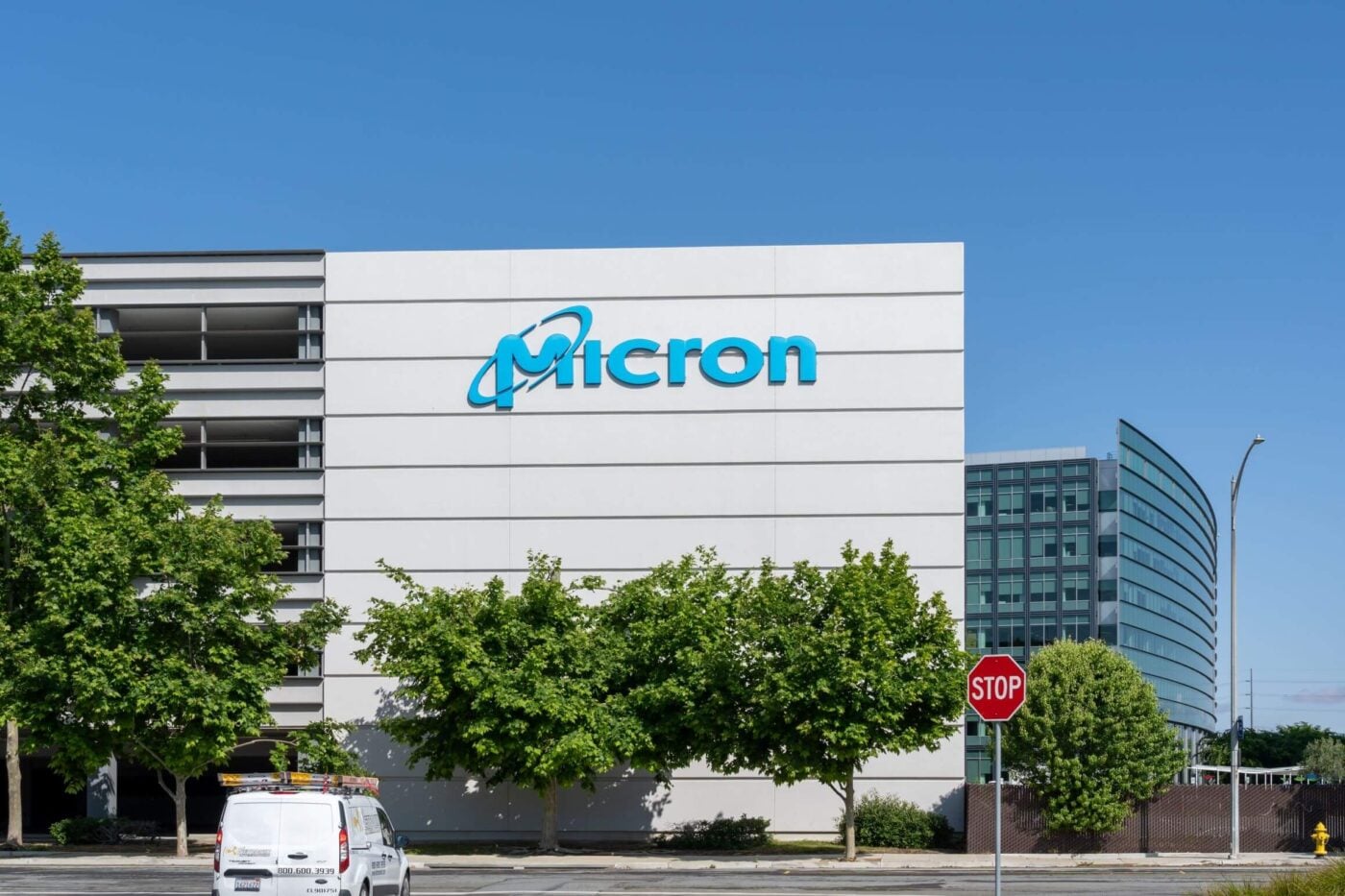
Micron Technology (MU) closed at $1,064.10 on Tuesday, gaining 2.76% and extending a remarkable run that has seen shares climb roughly 966% over the trailing twelve months. The memory semiconductor manufacturer recently achieved a $1 trillion market valuation—a remarkable feat considering the stock traded near $12 per share just ten years ago.
The catalyst propelling this extraordinary performance is clear: the artificial intelligence revolution. Micron manufactures high-bandwidth memory (HBM) chips that are essential for the massive data centers running large language models and enterprise AI platforms. As computational workloads become increasingly sophisticated and memory-intensive, demand for Micron’s advanced products has intensified dramatically.
HBM represents more than just another revenue stream. This vertically-stacked memory architecture, which debuted commercially in 2015, has evolved into a fundamental building block of contemporary AI systems. Industry analysts contend this technological transition distinguishes the current Micron expansion from the cyclical volatility that characterized the stock’s performance between 1996 and 2016.
Financial Performance and Projections
For the third quarter, Micron has provided guidance calling for $33.5 billion in revenue—representing a sequential increase of approximately 40% and year-over-year expansion nearing 300%. These figures are genuinely extraordinary.
Gross margin expectations stand at roughly 81% for Q3, a dramatic improvement from 39% in the comparable period last year and advancing beyond the 75% achieved in Q2. Earnings per share are anticipated to reach approximately $19.15, versus $1.91 in the prior-year quarter. Analyst consensus projects fiscal 2026 full-year earnings growth exceeding 663%, with an additional 74.5% expansion forecast for fiscal 2027.
Trading at 16.56 times forward earnings, the valuation appears reasonable when measured against that explosive growth trajectory. The most bullish analyst price target stands at $1,750, implying roughly 67% appreciation potential over the coming twelve months. The prevailing Wall Street consensus remains firmly in “Strong Buy” territory.
Supporting the optimistic outlook is Micron’s strategic shift toward multi-year supply contracts with major customers. These agreements are structured to dampen the revenue volatility that has traditionally plagued memory chip manufacturers, providing enhanced revenue visibility and improved pricing discipline.
The Inescapable Cyclical Threat
Yet investors must confront an inconvenient reality: the semiconductor industry’s cyclical nature remains intact.
Memory chips have consistently been the most volatile segment within the broader semiconductor landscape. Micron has weathered this pattern numerous times—supply constraints drive prices and profitability upward, eventual overcapacity triggers dramatic reversals, and the stock price mirrors these swings.
Currently, worldwide memory supply remains constrained, with no immediate indicators of an approaching downturn. The infrastructure buildout supporting artificial intelligence is absorbing memory production faster than manufacturing capacity can expand. However, every previous upcycle in memory semiconductors has ultimately transitioned into a downcycle. That’s not negativity—it’s simply historical precedent.
Risk-seeking investors have undeniably been handsomely compensated for holding MU shares over the past year. The critical question moving forward is whether the structural transformation driven by HBM adoption will moderate the severity of any future cyclical downturn—and on that matter, the evidence remains inconclusive.
Current analyst consensus establishes the 12-month high price target for MU at $1,750, with shares most recently changing hands at $1,064.10.
Get 3 Free Stock Ebooks
Discover top-performing stocks in AI, Crypto, and Technology with expert analysis.
- Top 10 AI Stocks - Leading AI companies
- Top 10 Crypto Stocks - Blockchain leaders
- Top 10 Tech Stocks - Tech giants


