


Key Takeaways
- AI infrastructure spending has propelled both Micron and SanDisk to become market-leading performers in the memory sector.
- Over the past month, Micron’s stock has surged nearly 20%, achieving a remarkable 270% gain in 2026, while SanDisk has jumped over 25% monthly and skyrocketed almost 700% year-to-date.
- The companies serve different market segments: Micron offers diversified exposure across HBM, DRAM, and NAND technologies, whereas SanDisk focuses primarily on NAND flash and enterprise storage solutions.
- Nvidia’s disclosure of approximately $279 billion in supply and capacity obligations extending through fiscal 2032 underscores the massive demand, with memory components representing the bulk of this investment.
- Both stocks remain attractively valued despite extraordinary price appreciation, with Micron trading at approximately 6x forward earnings and SanDisk at roughly 8x, based on current analysis.
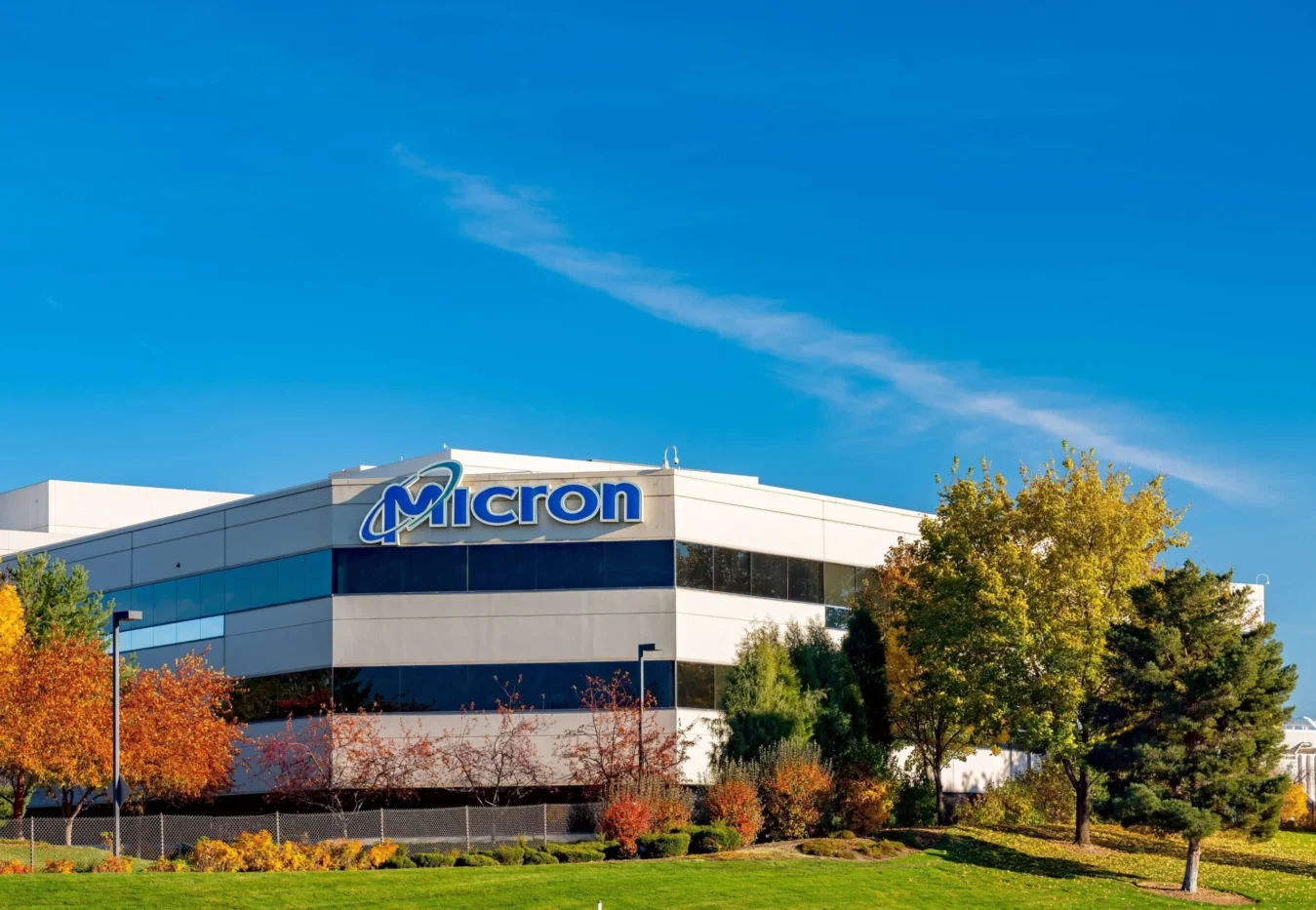
The artificial intelligence revolution has created unprecedented winners in the semiconductor space, with Micron Technology and SanDisk standing out as extraordinary beneficiaries of the memory and storage boom. Micron has delivered staggering returns exceeding 270% this year, while SanDisk has achieved an even more impressive climb approaching 700%.
The explosive growth in AI infrastructure deployment by Nvidia, alongside massive investments from cloud computing giants like Microsoft, Amazon, and Alphabet, has driven insatiable demand for memory solutions. While both companies capitalize on this transformative trend, their market positioning and product portfolios offer investors distinctly different value propositions within the burgeoning AI memory ecosystem.
Distinct Market Positioning in the AI Memory Landscape
Micron’s product portfolio spans the full spectrum of memory technologies, including DRAM, NAND flash, and the increasingly critical high-bandwidth memory (HBM). This diversification positions the company at multiple crucial points within AI server architectures. HBM technology has become particularly vital as it resides in close proximity to GPUs, delivering the exceptional memory bandwidth essential for both training sophisticated AI models and executing inference workloads.
The company has already commenced shipments of HBM4 products and anticipates launching its advanced HBM4E offerings in 2027. This technological roadmap embeds Micron deeply within the supply chains supporting next-generation AI accelerators with ever-increasing performance requirements.
SanDisk maintains a more specialized focus on NAND flash memory technologies and storage solutions, particularly enterprise-grade solid-state drives. The company’s data-center segment experienced explosive growth of 437% throughout fiscal 2026, fueled by the exponential increase in data volumes generated by AI applications requiring robust storage infrastructure.
This positioning creates a clear market segmentation between the two companies. Micron delivers memory solutions that function directly alongside AI processing units in addition to storage capabilities, whereas SanDisk offers investors more targeted exposure specifically to NAND technology and the enterprise storage dimension of AI infrastructure expansion.
Nvidia’s Massive Procurement Commitment Signals Market Dynamics
The extraordinary scale of AI memory requirements came into sharp focus through Nvidia’s recent disclosure regarding long-term supply obligations. The GPU leader revealed approximately $279 billion in supply and capacity commitments stretching through fiscal 2032, with company leadership indicating that memory procurement comprises the predominant share of this expenditure.
The timeline calls for roughly $92 billion of these commitments to be fulfilled during the remaining portion of fiscal 2027, with subsequent years requiring approximately $87 billion and $88 billion respectively. Nvidia characterized memory market conditions as exceptionally constrained, with demand substantially outpacing available production capacity.
HBM stands out as among the most supply-limited components because its availability directly determines the volume of AI accelerators that can be assembled and delivered to customers. DRAM supports the broader server ecosystem, while NAND provides storage for training datasets, model checkpoints, system logs, and the vast quantities of information produced by AI operations.
Micron’s product mix therefore provides direct participation in some of the most supply-constrained segments of the AI hardware ecosystem. SanDisk remains strategically positioned to capture value from rapidly expanding storage demands as AI workloads increasingly transition from development phases into large-scale production deployments.
Revenue and Profitability Acceleration at Both Firms
Micron’s guidance projects approximately $50 billion in revenue for its current fiscal fourth quarter, accompanied by an impressive 86% gross margin and adjusted earnings reaching roughly $31 per share. Zacks analysts forecast fiscal 2026 revenue could achieve $129.71 billion, representing a stunning 247% year-over-year increase.
The growth trajectory is anticipated to maintain momentum into fiscal 2027, with analyst consensus projecting revenue of approximately $250.19 billion and earnings of $158.45 per share. Persistent demand for HBM and DRAM from AI accelerator manufacturers is expected to serve as the primary catalyst.
SanDisk is similarly experiencing rapid expansion. Company guidance indicates first-quarter fiscal 2027 revenue between $10.3 billion and $10.8 billion, while full-year consensus estimates project revenue of $49.25 billion.
Analysts expect SanDisk earnings to surge approximately 201% to $213.31 per share in fiscal 2027. Enterprise solid-state drives and escalating NAND requirements from AI data centers remain fundamental to the company’s growth narrative.
Attractive Valuations Persist Despite Massive Stock Appreciation
Despite extraordinary share price advances, both companies maintain relatively modest valuations when assessed against projected earnings. Micron currently trades at approximately six times forward earnings, while SanDisk trades at roughly eight times, creating a substantial discount compared to the S&P 500’s approximately 22 times multiple cited in recent analysis.
These compressed valuation multiples partially reflect the memory industry’s historically cyclical characteristics. Memory stocks have traditionally appeared most attractively priced precisely when pricing power, profit margins, and overall profitability approach cyclical peaks.
The critical consideration for investors centers on whether AI infrastructure demand fundamentally alters this historical pattern. Extended supply agreements, persistent memory supply constraints, and extraordinary capital expenditure by hyperscale cloud providers could potentially extend the current upcycle well beyond the duration of previous memory industry booms.
Micron delivers comprehensive exposure spanning HBM, DRAM, and NAND technologies, while SanDisk maintains a more focused concentration on storage solutions. Both companies are capitalizing on the same fundamental market dynamic: AI systems require exponentially larger quantities of memory and storage at virtually every layer of the computing infrastructure stack.
Get 3 Free Stock Ebooks
Discover top-performing stocks in AI, Crypto, and Technology with expert analysis.
- Top 10 AI Stocks - Leading AI companies
- Top 10 Crypto Stocks - Blockchain leaders
- Top 10 Tech Stocks - Tech giants


