


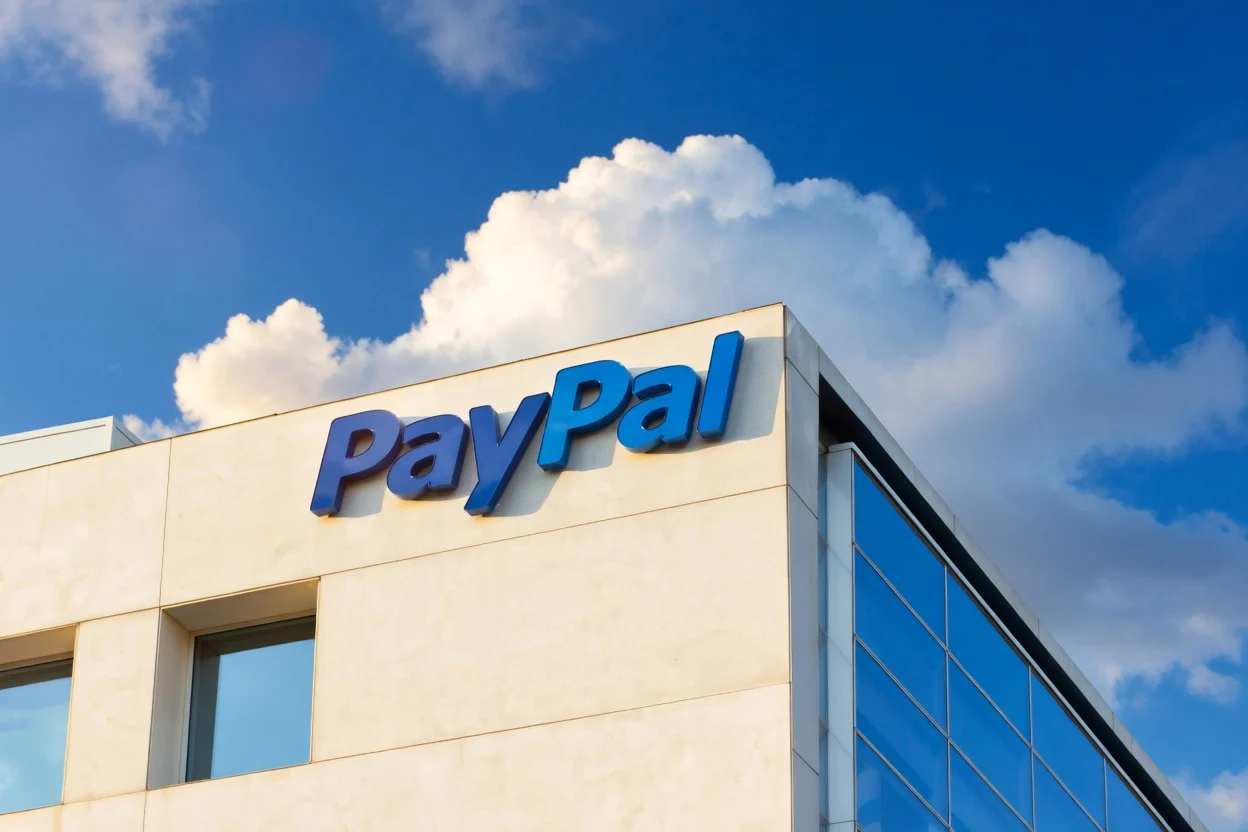
Key Takeaways
- Mizuho slashed PayPal’s rating from “Outperform” to “Neutral” while reducing the price target to $50 from $60
- X Money, Elon Musk’s upcoming payment solution, poses significant competitive risks to PayPal’s peer-to-peer payment operations
- Fourth-quarter results disappointed — earnings per share of $1.23 versus $1.29 analyst expectations; sales totaled $8.68B against $8.82B forecasts
- Company insiders offloaded 87,608 shares totaling approximately $3.83M during the last three months
- Wall Street’s consensus stands at “Hold” with a mean price objective of $56.61
PayPal is navigating challenging waters as Wall Street analysts adopt a more conservative stance. Mizuho Financial Group recently lowered its assessment of PYPL from “Outperform” to “Neutral,” simultaneously slashing the price objective by $10 — dropping from $60 to $50.
With shares trading near $50, this revised target implies minimal room for appreciation. The rating change signals Mizuho’s reassessment of PayPal’s market standing beyond immediate financial metrics.
The catalyst? Elon Musk’s X Money initiative. Set for an April debut, this payment solution is designed as the financial infrastructure of Musk’s “super app” vision. It merges payment processing, digital wallet functionality, and e-commerce capabilities — all integrated within X’s platform.
This description closely mirrors PayPal and Venmo’s core offerings. Mizuho identified X Money as a significant competitive challenge to PayPal’s peer-to-peer transaction services and branded payment solutions.
X boasts more than 400 million active monthly users. This represents a substantial ready-made customer base for any financial service launch. The platform is reportedly preparing to roll out cashtags for monitoring equities and cryptocurrencies, alongside potential collaboration with Visa.
Additional speculation suggests that X Money might provide yields approaching 6% on account balances — a capability that would position it as a serious alternative to established fintech offerings.
Quarterly Results Fell Short of Expectations
PayPal’s latest financial performance did little to alleviate investor concerns. The company posted fourth-quarter earnings of $1.23 per share, missing the $1.29 Wall Street consensus. Revenue registered at $8.68 billion versus projections of $8.82 billion.
While revenue increased 4% compared to the prior year, such modest expansion fails to inspire confidence as competitive pressures mount across multiple segments.
Market observers project annual EPS of $5.03 for PayPal. Shares currently trade at a price-to-earnings ratio of 9.39, appearing inexpensive — though the valuation discount reflects underlying concerns.
Citi and Wells Fargo both maintain Hold positions on the security, pointing to decelerating growth prospects and eroding market position. Goldman Sachs adopted a more bearish stance, reducing its target to $41 with a “Sell” recommendation issued in February.
Bank of America initiated coverage during March with a “Neutral” outlook and $48 price objective. Across the 45 analysts monitored by MarketBeat, 7 recommend Buy, 32 suggest Hold, and 6 advise Sell.
Institutional Investors and Company Insiders Reduce Holdings
Waterfront Wealth Inc. reduced its PYPL holdings by 45.8% during the fourth quarter, divesting 22,251 shares. The fund’s remaining position of 26,372 shares carried a value near $1.495 million at period close.
Company insiders have also been net sellers. During the previous 90 days, executives and directors disposed of 87,608 shares valued at roughly $3.83 million. Notable transactions include insider Suzan Kereere reducing ownership by 54.83% in February, while CAO Chris Natali cut his stake by 65.95% in March.
Institutional ownership remains substantial at 68.32% of outstanding shares. While certain smaller funds marginally increased positions in the third quarter, larger portfolio adjustments have predominantly involved position reductions.
PayPal’s 52-week trading range extends from $38.46 to $79.50. Shares opened Monday’s session at $50.81, trading above the 50-day moving average of $44.88 yet considerably beneath the 200-day average of $55.76.
The company maintains a quarterly dividend of $0.14, equating to an annual payout of $0.56 and yielding approximately 1.1%.
Get 3 Free Stock Ebooks
Discover top-performing stocks in AI, Crypto, and Technology with expert analysis.
- Top 10 AI Stocks - Leading AI companies
- Top 10 Crypto Stocks - Blockchain leaders
- Top 10 Tech Stocks - Tech giants


