


TLDR
- SK Hynix achieved a $1 trillion market capitalization for the first time, entering an elite club with Samsung and Micron
- The KOSPI index has surged 95% in 2026, leading global major indices in performance this year
- Institutional investors facing 10% single-position caps must liquidate Samsung and SK Hynix holdings
- According to Goldman Sachs, portfolio diversification requirements have generated approximately $69 billion in forced sales since October
- AI-driven demand has caused memory chip prices to double in Q1, with projections showing another 63% increase in Q2
South Korea has achieved a historic milestone with two domestic companies surpassing $1 trillion in market capitalization. SK Hynix reached this landmark valuation this week, joining its Korean counterpart Samsung Electronics and American competitor Micron Technology in the exclusive club.
The achievement stems from explosive growth in demand for advanced memory semiconductors that power artificial intelligence infrastructure. These specialized chips saw their prices surge by 100% during the first quarter of 2026 versus the preceding period.
SK Hynix equity finished Wednesday’s trading session with a 9.3% gain, having touched an intraday peak of 14.9%. Samsung stock advanced 2.7% to establish a new closing record at 307,000 won. Both securities have posted remarkable returns over the trailing twelve months.
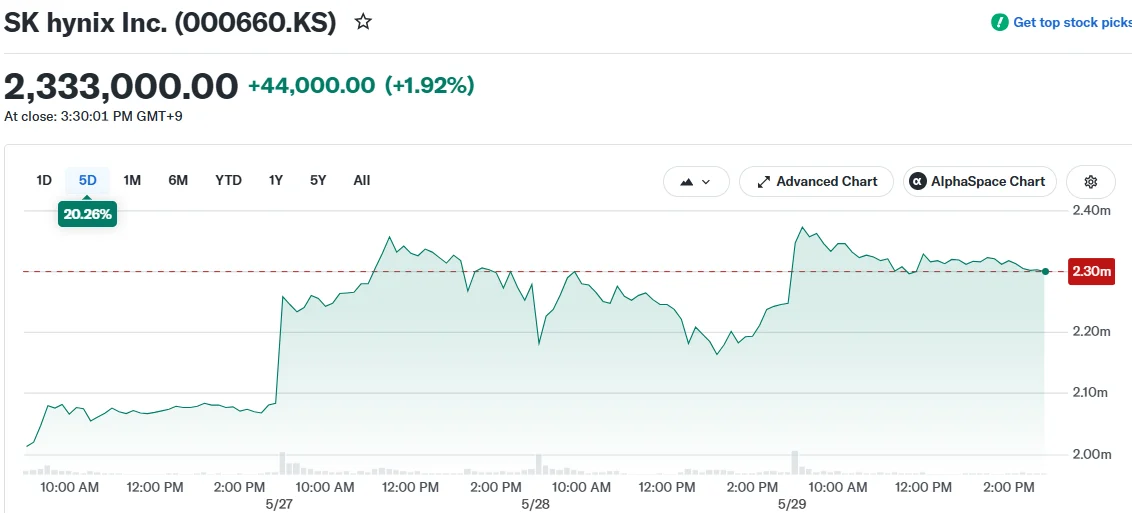
Samsung equity has appreciated 149% year-to-date in 2026. SK Hynix has delivered 215% returns, while Micron shares have advanced 245%.
Regulatory Constraints Drive Mandatory Liquidation
The dramatic appreciation in valuations has generated unexpected challenges for institutional portfolio managers. Investment funds adhering to 10% maximum single-security allocation rules now face mandatory rebalancing as their Samsung and SK Hynix positions breach concentration thresholds.
Zurich-based GAM Investment Management and Singapore’s Jupiter Asset Management rank among the asset managers compelled to restructure holdings to maintain compliance with diversification requirements.
Goldman Sachs analysis indicates that portfolio concentration rules have generated approximately $69 billion in forced liquidations since late October. Korea-focused investment vehicles controlling nearly $200 billion in assets have experienced impacts as the two semiconductor manufacturers’ aggregate index weighting has expanded.
International investors have executed net sales of $63.6 billion in Korean domestic equities through Thursday — representing the largest monthly capital outflow since data collection commenced in 1999. Samsung and SK Hynix combined accounted for $58.6 billion of this exodus.
Market Participants Pursue Indirect Exposure Strategies
Numerous portfolio managers are pivoting toward proxy securities to maintain indirect participation. SK Square, which maintains a 20.5% ownership stake in SK Hynix, has skyrocketed over 1,000% during the past year. Samsung Life Insurance, holding the largest Samsung position at 8.58%, has more than tripled in value.
Research analysts at Mirae Asset Securities elevated their price objectives for SK Hynix and Samsung by 18.8% and 14.6% respectively. Their forecasts anticipate memory semiconductor demand will continue outpacing supply capacity through 2028.
Newly introduced leveraged exchange-traded funds tracking Samsung and SK Hynix debuted this week with explosive gains. Individual investor appetite proved so overwhelming that a mandatory financial education platform required for ETF qualification experienced temporary system failures.
South Korea now stands as the first nation beyond the United States to boast multiple companies in the trillion-dollar valuation tier. The KOSPI benchmark has climbed 95% in 2026, following a 76% advance in the previous year, establishing it as the globe’s top-performing major equity index year-to-date.
Get 3 Free Stock Ebooks
Discover top-performing stocks in AI, Crypto, and Technology with expert analysis.
- Top 10 AI Stocks - Leading AI companies
- Top 10 Crypto Stocks - Blockchain leaders
- Top 10 Tech Stocks - Tech giants


