


TLDR
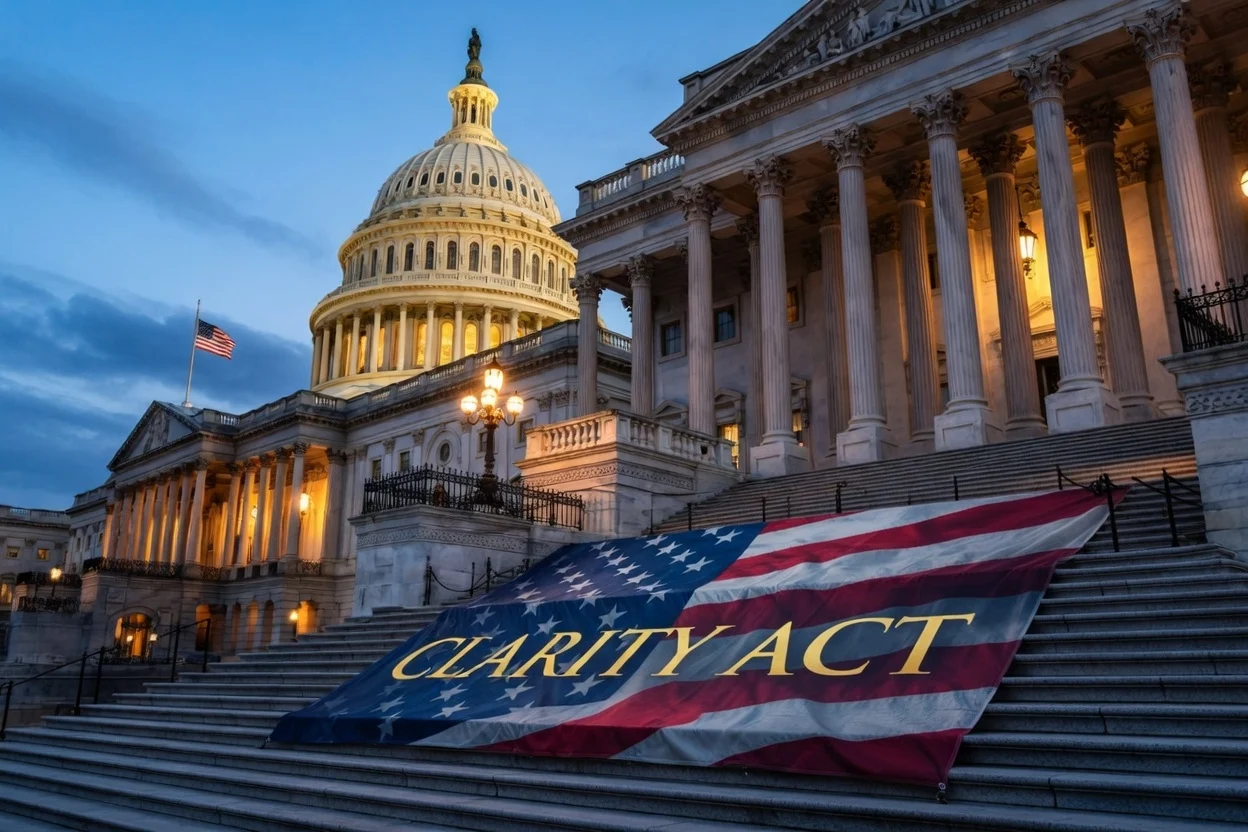
- SEC Chair Paul Atkins expects the CLARITY Act to advance in the Senate in September and eventually reach President Trump for a signature.
- The Senate is set to hold a procedural cloture vote on Sept. 15, which needs 60 votes to pass.
- The SEC sent a crypto custody proposal to the White House Office of Management and Budget on Aug. 25.
- Stablecoin rewards and ethics provisions remain the two biggest sticking points in negotiations.
- The CFTC is preparing its own digital asset rules in case Congress does not finish the bill.
SEC Chairman Paul Atkins said he expects the CLARITY Act to move forward in the Senate this month. He made the comment during an interview with Fox Business on Tuesday.
Atkins said he hopes the bill will eventually reach President Donald Trump’s desk for a signature. He pointed to a specific date for the next step in the process.
“The Clarity Act will be voted on in the Senate on the 15th of September,” Atkins said. He added that he anticipates the bill passing that stage.
The Sept. 15 action is a procedural vote, not a final vote on passage. Senators will decide whether to begin formal debate on the bill.
Supporters need 60 votes to clear this hurdle. Senate Majority Leader John Thune filed the motion before lawmakers left for August recess.
What the CLARITY Act Would Do
The Digital Asset Market Clarity Act would create a federal framework for digital assets. It would split regulatory duties between the SEC and the Commodity Futures Trading Commission.
The House passed the bill in July 2025 by a vote of 294 to 134. Seventy eight Democrats joined Republicans to support it.
The Senate Banking Committee advanced its own version in May 2026 by a vote of 15 to 9. Lawmakers had hoped to hold a full vote before August recess, but talks stalled.
Stablecoin Rewards and Ethics Rules Remain Sticking Points
One major dispute involves stablecoin rewards. Banking groups want tighter rules to stop platforms like Coinbase from offering rewards tied to stablecoin balances.
Banks argue this could pull deposits away from traditional institutions. Crypto companies say they should be allowed to share revenue with users who hold stablecoins.
Ethics provisions have also slowed progress. Some Democratic lawmakers want stronger limits on government officials profiting from crypto businesses.
A July proposal included language meant to restrict officials from promoting digital assets for profit. Some Democrats said the wording still fell short.
Republicans have blamed Democratic negotiators for shifting their demands. Senate Banking Committee Chairman Tim Scott made this argument during an August appearance.
Regulators are not waiting on Congress to act. The SEC sent a crypto custody proposal to the White House Office of Management and Budget on Aug. 25.
The proposal would clarify how investment advisers can hold crypto assets for clients. It may remove rules the SEC now views as outdated.
CFTC Chairman Michael Selig has taken a similar stance. He said in August that crypto will get market structure rules regardless of whether the bill passes.
The CFTC already regulates crypto derivatives and can act on fraud in spot markets. Broader oversight of spot markets would still require authority from Congress.
Any Senate changes to the bill would need to match the House version before it reaches Trump. If the Senate amends the text, the House would need to vote again.
The next formal step is the Sept. 15 cloture vote. Senators will decide then whether to begin full debate on the legislation.

