


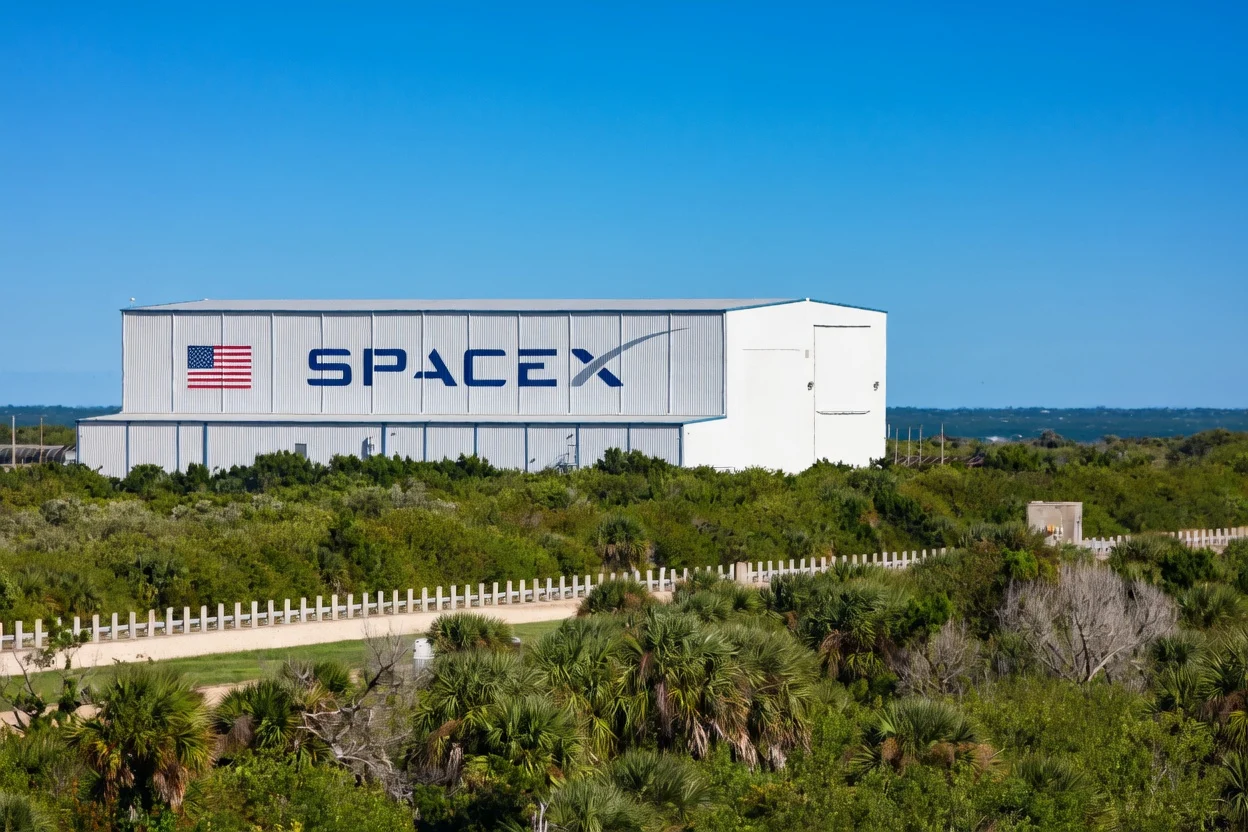
Key Takeaways
- Elon Musk’s SpaceX has submitted confidential IPO paperwork, pursuing a $1.75 trillion market cap with plans to raise $75 billion
- AI giants OpenAI and Anthropic are also planning 2026 public debuts, with the three firms potentially worth over $3 trillion collectively
- 2026’s IPO landscape features fewer offerings but larger capital raises — total proceeds jumped 35% while deal count fell 41.5%
- Historical analysis reveals mega-IPOs typically struggle early: most major offerings since 1999 declined within their first half-year
- The rocket company generated approximately $16 billion in revenue with $8 billion in profits during 2025
Elon Musk’s SpaceX has submitted confidential documentation for a public stock offering that could become the most significant IPO ever recorded. The aerospace manufacturer is pursuing a staggering $1.75 trillion market capitalization while seeking to secure $75 billion through the offering.
Should these figures materialize, SpaceX would surpass Tesla to become America’s eighth-most valuable public corporation.
Musk, who simultaneously leads Tesla, has delivered extraordinary returns for that company’s shareholders — nearly 23,000% gains since its June 2010 market debut. Market participants are anticipating SpaceX might replicate that impressive trajectory.
The rocket manufacturer recorded approximately $16 billion in annual revenue during 2025, alongside $8 billion in net profit. These financials position the company significantly ahead of typical pre-IPO ventures in terms of operational maturity.
Beyond its core launch business, the company manages Starlink, its satellite-based internet service. Earlier this year, SpaceX consolidated operations with Musk’s xAI venture, which encompasses the Grok artificial intelligence system and the X social platform.
The aerospace firm isn’t the only major player preparing for public markets. Artificial intelligence leaders OpenAI and Anthropic are both anticipated to submit their own IPO filings before 2026 concludes. The combined valuation of these three entities could exceed $3 trillion.
Goldman Sachs CEO David Solomon recently noted during an earnings discussion that equity markets have demonstrated “extremely resilient” behavior, suggesting IPO momentum could strengthen. Meanwhile, Morgan Stanley CEO Ted Pick observed that investor standards for IPOs remain “very high” under present market conditions.
A Shifting IPO Landscape
The 2026 IPO environment shows a clear trend: reduced volume but increased deal size. Data through mid-April indicates 38 companies valued above $50 million have completed public offerings — representing a 41.5% decrease compared to last year’s corresponding timeframe. However, aggregate capital raised has climbed 35% to reach $13.3 billion, per Renaissance Capital statistics.
This week witnessed filtration specialist Madison Air complete a $2.2 billion raise, marking 2026’s largest IPO to date with a $13.3 billion valuation. Shares surged nearly 20% during initial trading. Defense technology company Arxis secured $1.1 billion and experienced a 38% first-day pop.
Not all 2026 debuts have enjoyed similar success. Cryptocurrency platform BitGo, oncology biotech Eikon Therapeutics, and diabetes device manufacturer MiniMed are all currently trading substantially beneath their initial offering prices.
History Warns of a Rough Start
Despite considerable enthusiasm surrounding SpaceX, historical performance data suggests mega-IPOs frequently face challenging initial periods.
Since 1999, the majority of large-scale public offerings have underperformed during their first six months of trading. Facebook plummeted 38% within half a year of its listing. Alibaba declined 9%, General Motors dropped 8%, and Saudi Aramco fell 15%. Visa stands as the outlier, gaining 23%. Collectively, the largest IPOs have averaged roughly 10% losses six months post-debut.
For SpaceX, a comparable 10% retreat from its proposed valuation would eliminate approximately $175 billion in market capitalization.
Retail investors must also consider whether the most substantial returns have already been captured through private funding rounds. Pre-IPO investment vehicles offered by firms such as ARK Invest, Robinhood, and Baron Capital provide early access, though many have experienced significant volatility throughout the year.
SpaceX has not disclosed a definitive public filing date or established a confirmed timeline for its market listing.
Get 3 Free Stock Ebooks
Discover top-performing stocks in AI, Crypto, and Technology with expert analysis.
- Top 10 AI Stocks - Leading AI companies
- Top 10 Crypto Stocks - Blockchain leaders
- Top 10 Tech Stocks - Tech giants


