


Key Takeaways
- In June 2026, SpaceX launched its IPO with a $1.77 trillion valuation, rapidly surpassing the $2 trillion market capitalization threshold
- Despite generating $18.67 billion in 2025 revenues, SpaceX continues operating at a loss with $4.94 billion in net deficit
- Following a June 17 SpaceX launch, AST SpaceMobile expanded its orbital constellation to nine BlueBird satellites
- AST SpaceMobile’s Q1 2026 financials show $14.7 million revenue with $3.5 billion cash reserves and projected 2026 revenues between $150-$200 million
- Analyst sentiment on AST SpaceMobile skews negative with a Reduce consensus and $81.33 average target price
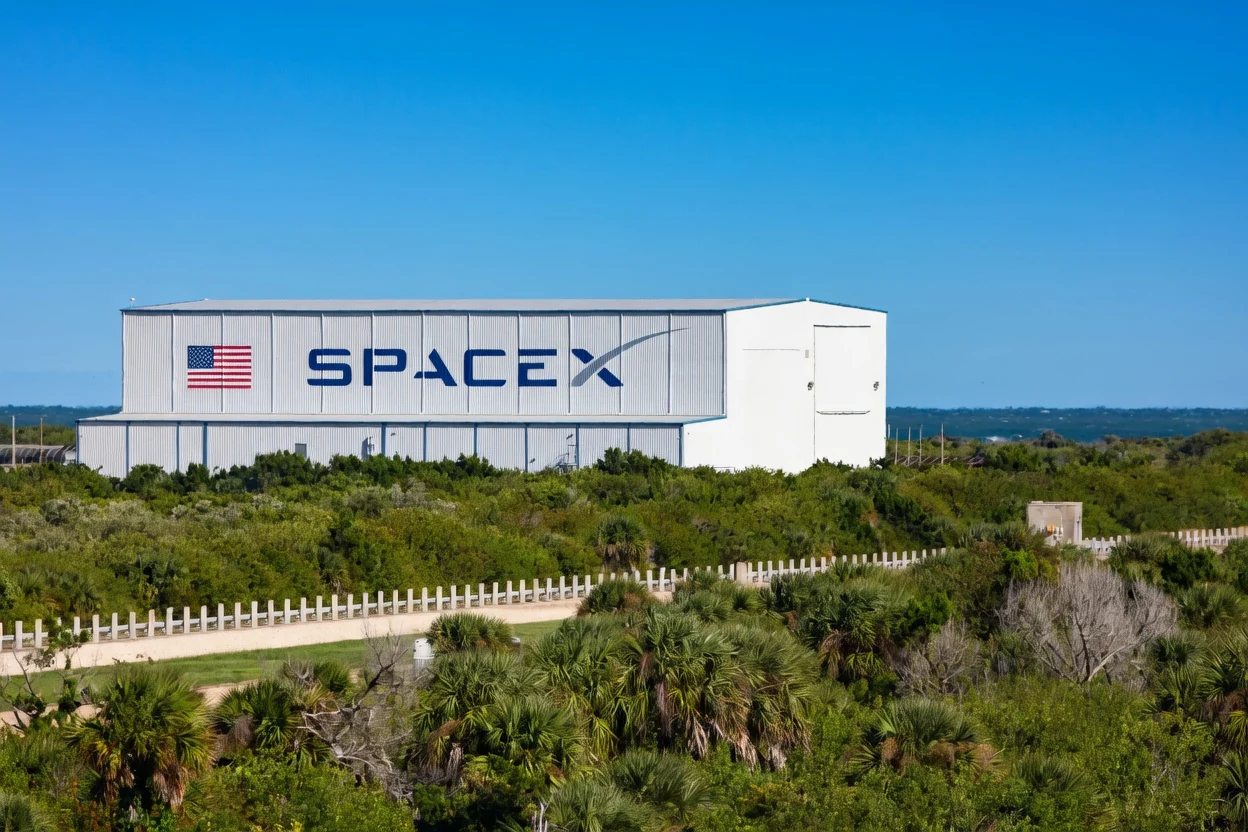
The space industry witnessed a monumental event in June 2026 when SpaceX entered the public markets with a staggering $1.77 trillion valuation. Trading activity quickly pushed the company’s market capitalization beyond $2 trillion, positioning it among the planet’s most valuable enterprises.
Space Exploration Technologies Corp., SPCX
Financial results from 2025 revealed revenues of $18.67 billion, representing substantial growth from the previous year’s $14.02 billion. However, aggressive capital deployment in rocket technology and infrastructure resulted in a $4.94 billion net deficit.
SpaceX has evolved far beyond its original rocket-launching mission. Today’s operations encompass launch services, reusable rocket technology, and the Starlink satellite internet division. Reuters characterizes the company as a comprehensive “space, satellite and AI provider.”
The Starlink division provides SpaceX with predictable, subscription-based income that distinguishes it from traditional aerospace competitors. This broadband operation has achieved meaningful scale, with future expansion tied to Starship advancement, government procurement, and global Starlink deployment.
Investors must grapple with valuation concerns. The current price reflects extraordinary growth expectations despite ongoing profitability challenges.
AST SpaceMobile Expands Its Orbital Infrastructure
AST SpaceMobile pursues an alternative strategy. This company develops satellite infrastructure enabling direct communication with standard mobile devices without specialized equipment.
A SpaceX launch on June 17 deployed three additional AST BlueBird satellites, expanding the operational constellation to nine units. The company projects having 45 satellites operational before 2026 concludes.
First-quarter 2026 financial results showed $14.7 million in revenue alongside a -$0.66 earnings per share. The balance sheet reflects $3.5 billion in cash reserves, with management reaffirming annual revenue projections of $150-$200 million for 2026.
The investment narrative remains speculative. Market participants are wagering on eventual commercialization rather than existing scale.
Despite the recent launch success, uncertainties persist. Barron’s highlighted that investors await confirmation of complete satellite deployment and operational functionality.
Fundamental Differences Between These Space Investments
The chasm separating these companies centers on operational validation. SpaceX operates an established, revenue-generating commercial space enterprise. AST SpaceMobile continues demonstrating its direct-to-device concept can achieve global viability.
SpaceX delivers greater predictability. It possesses established revenue streams, developed infrastructure, and proven execution. AST SpaceMobile presents superior upside potential should its network achieve commercial maturity, though execution risks remain substantially elevated.
Analyst coverage mirrors this distinction. Eleven analysts track AST SpaceMobile with a Reduce consensus: one buy rating, seven hold recommendations, and three sell ratings. Their average price objective sits at $81.33.
SpaceX’s recent public debut precludes comprehensive analyst consensus, though its immediate post-IPO valuation demonstrates significant investor confidence in its market dominance.
While both organizations operate within the broader space sector, their developmental stages differ dramatically.
Investor selection ultimately hinges on preference: established operations versus speculative growth potential.
Get 3 Free Stock Ebooks
Discover top-performing stocks in AI, Crypto, and Technology with expert analysis.
- Top 10 AI Stocks - Leading AI companies
- Top 10 Crypto Stocks - Blockchain leaders
- Top 10 Tech Stocks - Tech giants


