



Key Takeaways
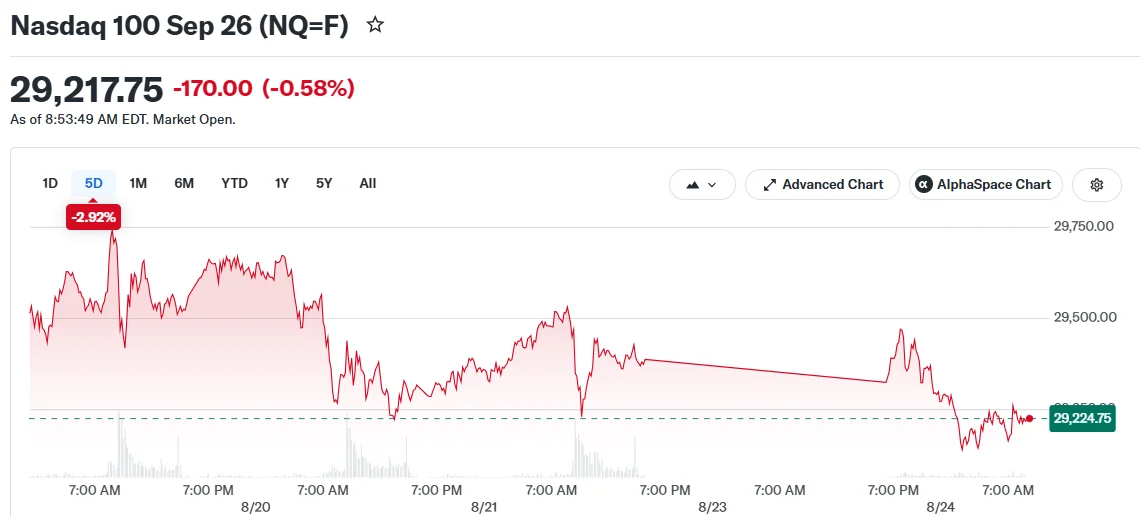
- Stock futures declined Monday morning, with Nasdaq futures dropping 0.7% ahead of the opening bell
- Negotiations between the United States and Canada collapsed this weekend, prompting Canada to pledge retaliatory tariffs
- New sanctions targeting Iran will be unveiled by Treasury Secretary Scott Bessent Monday afternoon
- Nvidia (NVDA) is scheduled to release quarterly results Wednesday, offering insight into AI infrastructure investment
- The 10-year Treasury yield hovers near 4.7%, continuing to weigh on equity valuations
Equity futures opened lower Monday as investors confronted a confluence of challenges including deteriorating trade relations, geopolitical uncertainty, and crucial corporate earnings ahead.
Nasdaq 100 futures declined 0.7% during pre-market hours. Futures tied to the S&P 500 slipped 0.3%, while Dow Jones Industrial Average futures fell by a similar margin.
Trade Negotiations With Canada Collapse
Deteriorating relations with America’s northern neighbor are contributing to market uncertainty. Negotiations between Washington and Ottawa broke down over the weekend, prompting the United States to move forward with additional tariffs on Canadian imports.
In response to the breakdown, Canadian Prime Minister Mark Carney halted further discussions. He pledged to implement reciprocal tariffs targeting American products.
Major equity benchmarks closed the previous week in negative territory. Investor anxiety over rising long-term bond yields, mounting federal debt levels, and escalating tensions in energy-producing regions has dampened market enthusiasm.
The benchmark 10-year Treasury yield ticked lower Monday, declining 3.4 basis points to settle at 4.702%. The 30-year bond yield, which reached a 19-year peak of 5.337% during the prior week, was trading at 5.236%.
Energy markets also showed movement Monday. Oil prices retreated, with Brent crude falling 1.2% to $91.52 per barrel and West Texas Intermediate declining 1.8% to $85.53. Both benchmarks had rallied over 5% in the previous trading week.
New Economic Measures Targeting Iran
The current administration is poised to intensify financial pressure on Tehran. In an opinion piece published in the Financial Times, Treasury Secretary Scott Bessent characterized the forthcoming actions as “an economic D-Day, the single greatest financial offensive ever marshalled against an adversary.”
Bessent was expected to unveil specifics of the enhanced sanctions during a press briefing scheduled for 2 p.m. Eastern time Monday.
The Strait of Hormuz, a critical chokepoint for global oil shipments, continues to face disruptions due to heightened regional tensions. Authorities have not provided a definitive date for when standard maritime traffic might resume.
Tech Sector Awaits Nvidia Results
Nvidia is set to release quarterly earnings Wednesday after market close. The semiconductor giant’s performance is widely viewed as a barometer for artificial intelligence infrastructure investment, and analysts expect the results to influence sentiment across the technology sector.
Marvell Technology will follow with its earnings report Thursday. The company’s financial data will provide additional perspective on spending trends in AI-related hardware.
The Federal Reserve’s annual economic symposium in Jackson Hole commences Thursday. Market participants will scrutinize comments from central bank officials for clues regarding future monetary policy adjustments.
Investors enter the trading week confronting multiple simultaneous challenges. Elevated bond yields, escalating trade friction, Middle Eastern instability, and high-profile earnings announcements are all converging to create uncertainty.
Get 3 Free Stock Ebooks
Discover top-performing stocks in AI, Crypto, and Technology with expert analysis.
- Top 10 AI Stocks - Leading AI companies
- Top 10 Crypto Stocks - Blockchain leaders
- Top 10 Tech Stocks - Tech giants


