



Key Takeaways
- Micron Technology soared more than 18% in premarket trading following stellar earnings results and an upgraded forecast
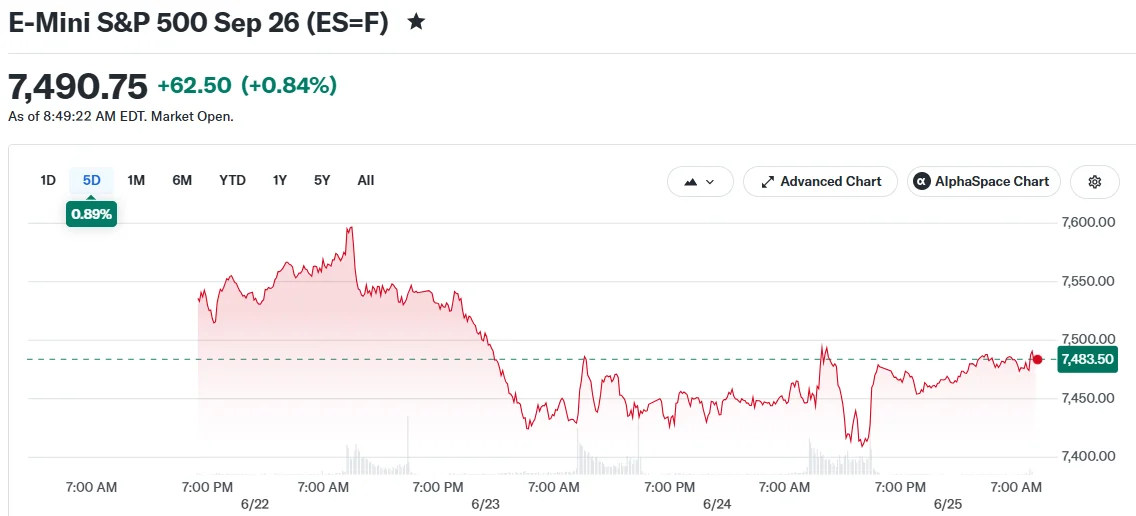
- Futures for the Nasdaq 100 climbed 2.1%, while S&P 500 futures advanced 0.7% before Thursday’s trading session
- Qualcomm revealed plans to enter the data center market, setting a $15 billion revenue goal for new business segments
- Crude oil prices retreated to levels seen before Iran conflict escalation, with Brent falling under $73 per barrel
- Personal Consumption Expenditures inflation report aligned with forecasts, pushing bond yields down and supporting market gains
Wall Street faced a challenging week leading up to Thursday’s session, but stellar results from Micron Technology provided a welcome boost to investor sentiment. The semiconductor manufacturer delivered exceptional quarterly performance, surpassing analyst projections for both profit and future guidance. Shares skyrocketed over 18% in early trading.
The impressive performance helped alleviate growing anxieties about artificial intelligence investments. Market participants had expressed skepticism about whether massive AI infrastructure spending would generate returns. Micron’s robust figures indicated that demand for memory components powering AI applications continues to flourish.
Nasdaq 100 futures surged 2.1% after the earnings announcement. S&P 500 futures gained 0.7%. Dow futures increased a modest 0.1%, reflecting the index’s lighter exposure to technology companies.
Qualcomm also captured market attention. The semiconductor firm announced strategic expansion beyond its smartphone core business into data center hardware, including processors and server systems. The company established a $15 billion revenue target for this new initiative. Qualcomm shares jumped over 12% during premarket hours.
Energy Markets and Inflation Metrics Take Center Stage
Oil prices experienced significant declines on Thursday. Brent crude slipped below $73 per barrel. West Texas Intermediate descended under the $70 threshold. These price points represent a return to pre-conflict levels before Iran’s military actions disrupted shipping through the Strait of Hormuz.
The decline occurred as Persian Gulf supply channels normalized, relieving strain on global energy markets. Declining crude prices offer potential relief from inflationary pressures, which have dominated investor concerns throughout the year.
Market attention centered on the Personal Consumption Expenditures index, which serves as the Federal Reserve’s preferred inflation gauge. Previous May economic reports, covering both consumer and producer prices, had exceeded expectations. Those figures sparked worries that the central bank might implement additional rate increases.
The PCE data release aligned precisely with analyst predictions. Core PCE, excluding volatile food and energy categories, increased 0.3% for May. The overall measure climbed 0.4%. Both readings matched economist consensus.
Market momentum sustained itself following the inflation report. S&P 500 futures stood at 0.8% gains. Nasdaq 100 futures extended advances to 2.3%. Dow futures registered 0.3% increases.
Treasury yields retreated across the curve. The 2-year Treasury yield declined to 4.12%. The benchmark 10-year yield dropped to 4.39%. Declining yields generally reflect diminished concerns regarding inflation pressures or monetary tightening.
The convergence of strong semiconductor earnings, declining energy costs, and inflation data meeting expectations provided investors with multiple reasons for optimism after recent market turbulence.
Both Qualcomm’s data center ambitions and Micron’s positive guidance reinforced the narrative of sustained corporate spending on AI infrastructure, despite ongoing market debates about technology sector valuations.
The PCE release represented the week’s final significant economic data point for US equity markets.
Get 3 Free Stock Ebooks
Discover top-performing stocks in AI, Crypto, and Technology with expert analysis.
- Top 10 AI Stocks - Leading AI companies
- Top 10 Crypto Stocks - Blockchain leaders
- Top 10 Tech Stocks - Tech giants


