



Key Takeaways
- Tech giants Microsoft, Google, and IBM are pouring resources into quantum computing, though none has generated significant revenue from it yet
- Microsoft leverages Azure Quantum for enterprise cloud-based quantum access, earning predominantly Buy ratings from analysts
- Google dominates quantum research but hasn’t established a clear revenue model
- IBM boasts the most comprehensive quantum development timeline and extensive enterprise collaboration network
- Analyst consensus leans toward Buy across all three, though quantum remains a long-horizon investment rather than near-term profit catalyst
The quantum computing revolution has transitioned from theoretical promise to tangible market reality, emerging as one of the most scrutinized investment opportunities in technology. As industry leaders and innovative startups compete to unlock quantum supremacy, forward-thinking investors are establishing positions in what analysts project could become a several-trillion-dollar sector.
Spanning revolutionary applications in secure communications, pharmaceutical development, and complex optimization challenges beyond classical computing capabilities, the implications are staggering—and financial markets are taking notice.
By 2026, the quantum computing investment narrative has evolved from speculative betting to calculated portfolio strategy. Industry heavyweights are amplifying capital commitments, collaborative ventures are multiplying, and initial real-world applications are beginning to materialize. Yet with promotional fervor occasionally exceeding current capabilities, distinguishing companies with authentic staying power has become critical.
This analysis examines the premier quantum computing stocks deserving attention in 2026—evaluating Wall Street’s preferred choices, the underlying technological foundations, and which corporations are optimally positioned to capitalize as the quantum computing age unfolds.
Microsoft
Microsoft’s quantum computing initiative operates primarily through its Azure infrastructure. Azure Quantum provides organizations and programmers with cloud-based access to various quantum computing systems. Additionally, the corporation is pursuing topological qubit development, engineered for enhanced reliability compared to existing alternatives.
Microsoft Corporation, MSFT
Currently, quantum computing represents a modest fraction of Microsoft’s revenue streams. Analysts predominantly concentrate on Azure platform expansion and corporate software solutions when assessing stock valuation. However, Azure’s quantum integration positions Microsoft to capture emerging market demand independent of proprietary hardware innovations.
Wall Street maintains an optimistic outlook on Microsoft. The equity commands a Strong Buy consensus rating, with the majority of analysts recommending purchase and minimal Hold or Sell designations.
Google conducts its quantum initiatives through Google Quantum AI. The organization is widely recognized as a research pioneer and has demonstrated notable early performance achievements. It maintains ongoing investments in qubit enhancement and error mitigation technologies.
Contrary to Microsoft’s approach, Google hasn’t established a clearly articulated commercial quantum platform. While cloud-based access exists, the monetization trajectory remains ambiguous.
Analyst perspectives on Alphabet remain largely favorable, featuring substantial Buy recommendations. Nevertheless, the stock garners more neutral assessments than Microsoft, partially attributed to concerns regarding its primary advertising operations and uncertain quantum revenue generation strategy.
IBM
IBM stands as the most established player among the trio. The company has released a detailed scaling blueprint for quantum systems and operates the IBM Quantum platform, facilitating a worldwide consortium of corporate and academic collaborators.
International Business Machines Corporation, IBM
IBM concentrates on superconducting qubit technology and has articulated explicit benchmarks for capability advancement and expansion. Quantum computing occupies a more prominent position in IBM’s corporate narrative compared to Microsoft or Google.
Analyst recommendations for IBM demonstrate greater equilibrium. The stock maintains a Moderate Buy consensus, incorporating both Buy and Hold positions. Certain analysts express reservation due to IBM’s comparatively modest growth relative to competing technology corporations.
Concluding Analysis
Quantum computing hasn’t evolved into a substantial income source for any of these three corporations presently. IBM presents the most systematic execution plan, Microsoft possesses the most advantageous platform infrastructure, and Google maintains the most extensive research foundation.
Special Report: Additional Quantum Computing Stocks Beyond This Analysis
Our research encompassed significantly more quantum computing enterprises than those featured in this article.
The three highlighted here represent merely a fraction — numerous others demonstrated comparable merit, and occasionally superior characteristics, evaluated on momentum, expansion, and comprehensive market positioning.
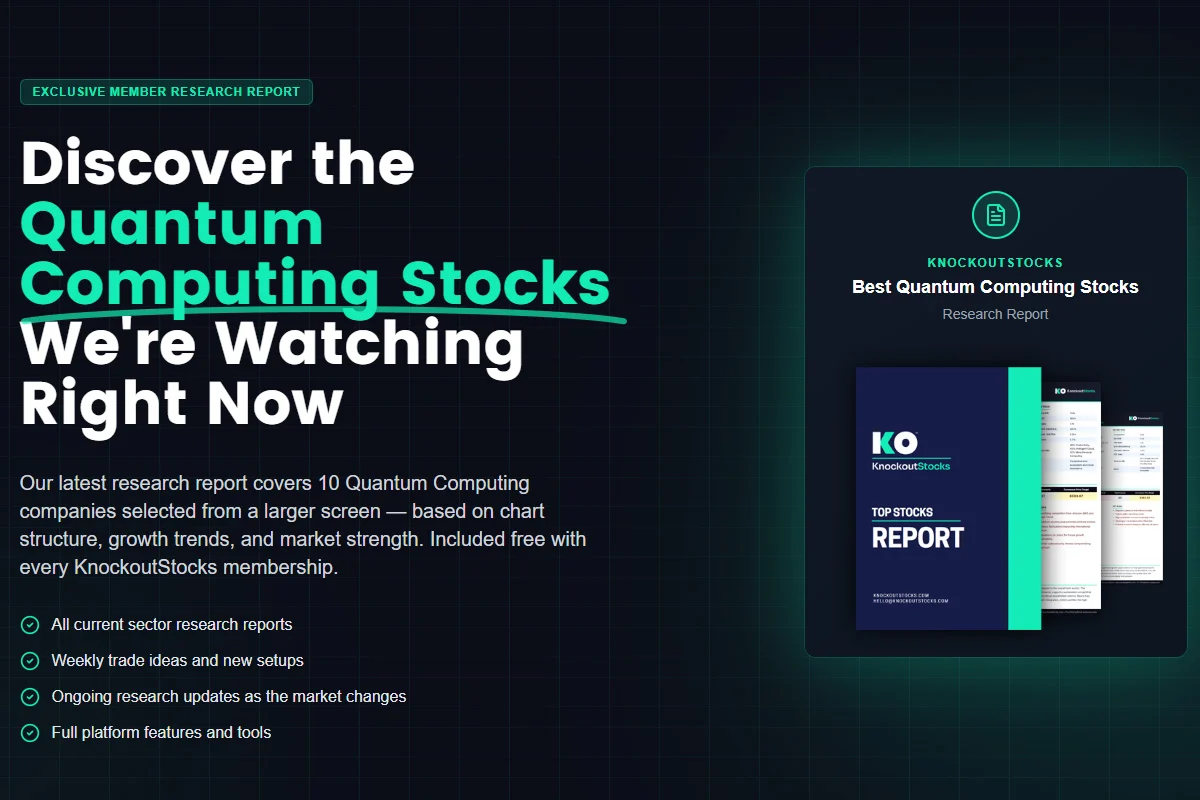
Several of these receive limited analyst coverage currently, which precisely explains their prominence during our evaluation methodology. Rather than releasing comprehensive findings publicly, we compiled a dedicated analysis featuring 10 quantum computing equities that presently exhibit elevated potential based on our proprietary assessment frameworks and current intelligence.
This comprises the identical portfolio we’re monitoring internally, complete with technical charts, critical price levels, and commentary on each enterprise.
👉 To review the complete roster before broader market awareness develops, you can obtain the Quantum Computing Stocks analysis here
Get 3 Free Stock Ebooks
Discover top-performing stocks in AI, Crypto, and Technology with expert analysis.
- Top 10 AI Stocks - Leading AI companies
- Top 10 Crypto Stocks - Blockchain leaders
- Top 10 Tech Stocks - Tech giants


