


Key Takeaways
- President Donald Trump announced plans for a $5,000 payment to every American adult contingent on Republican victories in the House and Senate this November
- The initiative carries a price tag exceeding $1 trillion, creating substantial questions about financing mechanisms
- Legal experts warn the plan could breach federal statutes prohibiting financial incentives tied to electoral outcomes
- Historical patterns show Trump’s earlier cash payment commitments, including tariff rebates and DOGE dividends, failed to reach fruition
- Current fiscal year deficits are approaching $1.8 trillion, compounding budget concerns
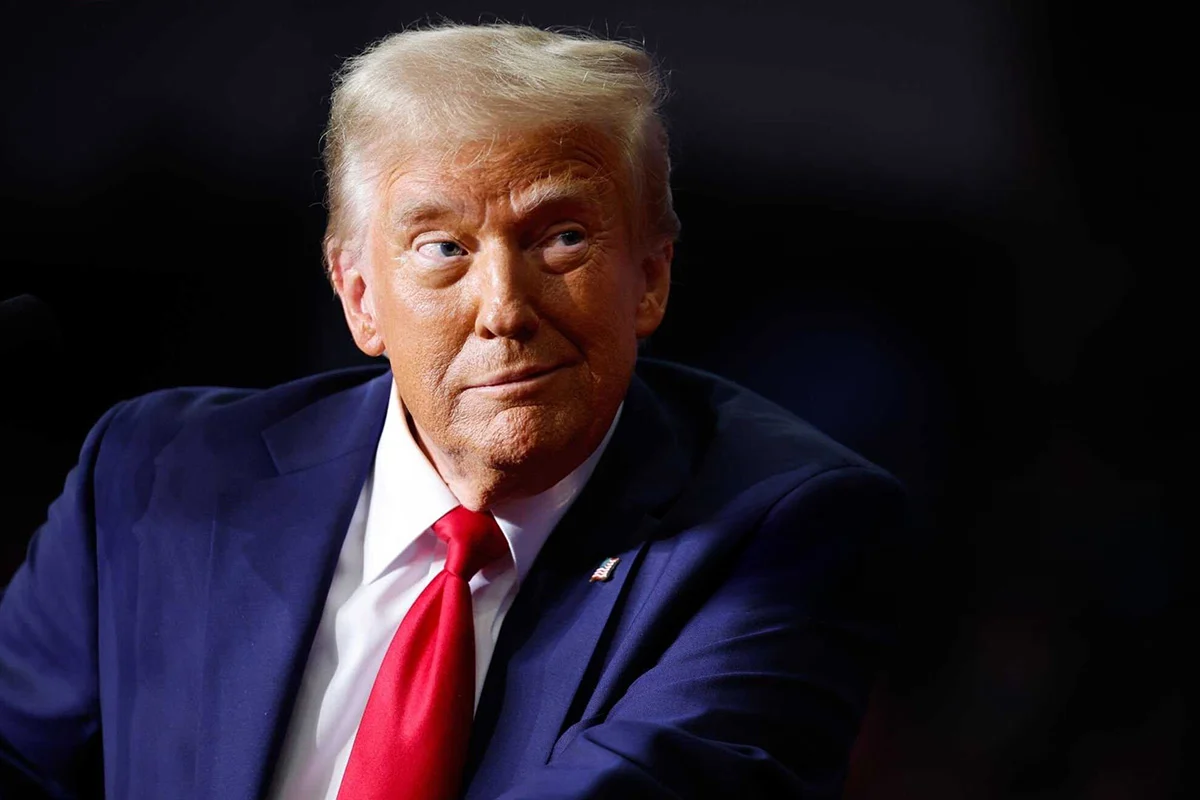
Speaking before enthusiastic supporters at the Republican National Committee’s midterm gathering in Dallas this Wednesday, [[LINK_START_0]]President Donald Trump[[LINK_END_0]] unveiled an ambitious financial pledge: $5,000 direct payments to every adult citizen across America, provided Republicans secure majorities in both congressional chambers come November.
“If the Republicans win the House of Representatives and the United States Senate, both of them… I will issue a dividend to every adult citizen in the United States of America for $5,000,” the president declared to the assembled crowd.
Trump stipulated a single requirement: recipients must use the funds domestically within U.S. borders. The announcement contained no specifics regarding how the administration would finance such an undertaking.
The Staggering Financial Burden
Implementation of this dividend program would demand an outlay surpassing $1 trillion. To contextualize this figure, federal expenditures already include $1.27 trillion in debt service payments this fiscal year and $1.36 trillion allocated toward defense operations in 2026.
America’s fiscal deficit is tracking toward $1.8 trillion for the current fiscal year. Projections from the Congressional Budget Office anticipate the 2026 full-year deficit will climb to $2.1 trillion.
The debt-to-GDP ratio reached 122.6% during Q1 2026. Federal borrowing expenses have escalated dramatically in recent periods as markets react to inflationary pressures and mounting debt obligations.
Skeptics contend such a dividend would necessitate additional government borrowing rather than reflecting authentic budgetary surpluses or efficiency gains.
Constitutional and Criminal Law Concerns
Beyond fiscal considerations, the proposal confronts potential legal obstacles. Existing federal statutes criminalize providing monetary compensation designed to sway voting behavior. Violators face monetary penalties and potential imprisonment of up to two years for intentional infractions.
CNBC contacted White House representatives seeking clarification on these legal dimensions but has yet to receive official commentary.
The announcement follows recent findings by a bipartisan investigative committee that Elon Musk’s distribution of $1 million payments to voters during the 2025 Wisconsin Supreme Court race likely violated state election laws. That matter has been forwarded to prosecutorial authorities.
A Track Record of Broken Financial Commitments
This isn’t the president’s first foray into promising direct payments to Americans. Earlier in his current term, Trump championed a $5,000 “DOGE dividend” supposedly financed through Department of Government Efficiency cost reductions. That payment never reached American households.
Similarly, he advocated for a $2,000 “tariff rebate” program funded through international trade revenues. This initiative disintegrated following a Supreme Court decision invalidating his tariff framework in early 2026.
During the Covid-19 crisis, federal authorities distributed trillions in stimulus checks to American families. Economic analysts continue debating whether those disbursements fueled the subsequent inflationary wave that gripped the economy.
The GOP confronts significant obstacles in November’s elections. Current polling models favor Democratic control of the House of Representatives. Rising tensions with Iran orchestrated under Trump’s foreign policy approach, combined with elevated gasoline costs, are complicating Republican electoral prospects as the midterm date approaches.
Get 3 Free Stock Ebooks
Discover top-performing stocks in AI, Crypto, and Technology with expert analysis.
- Top 10 AI Stocks - Leading AI companies
- Top 10 Crypto Stocks - Blockchain leaders
- Top 10 Tech Stocks - Tech giants


