



Key Highlights
- Major U.S. equity indexes rallied on Thursday following the Federal Reserve’s quarter-point rate increase
- The Dow climbed 316 points, S&P 500 advanced 1.14%, and Nasdaq surged 1.69%
- Technology shares drove the rally, with Nvidia and Amazon posting gains exceeding 2%
- Bond yields retreated from the 5% threshold while crude oil prices declined, improving market sentiment
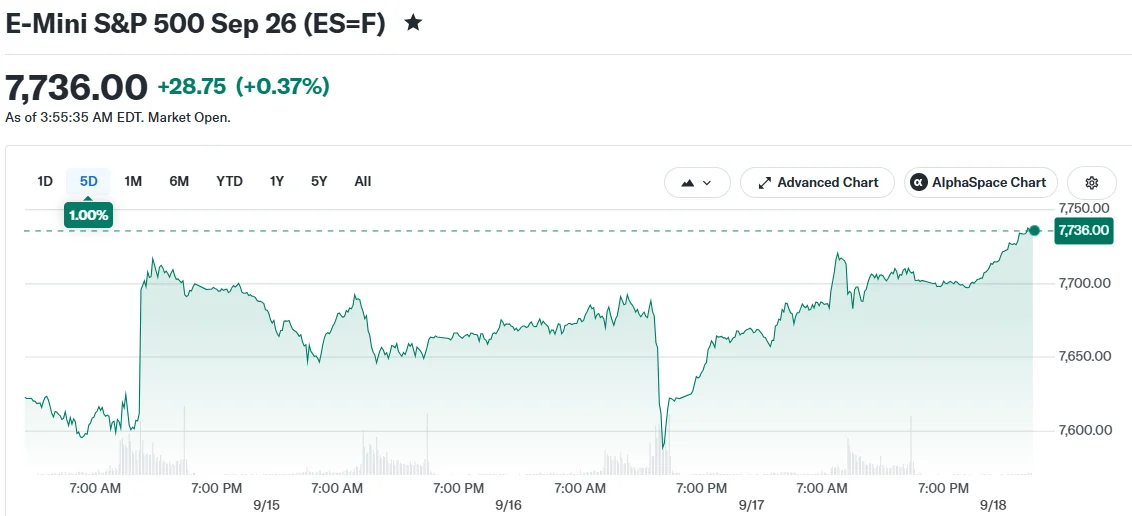
- Pre-market indicators suggested continued strength after the Bank of Japan’s rate adjustment accompanied by accommodative messaging
U.S. stocks staged a strong comeback on Thursday, reversing Wednesday’s downturn that followed the Federal Reserve’s initial interest rate increase in three years. A combination of declining crude oil values and retreating Treasury yields provided the catalyst for the broad-based market advance.
The Dow Jones Industrial Average advanced 316 points, representing a 0.61% increase, finishing at 51,778. The S&P 500 posted a 1.14% gain to settle at 7,637, while the Nasdaq Composite delivered the strongest performance with a 1.69% surge to 26,418.
Technology Sector Spearheads Market Advance
Technology stocks emerged as the primary drivers behind Thursday’s market resurgence. Nvidia and Amazon each posted gains surpassing 2%, while Microsoft advanced 1.5%. Semiconductor companies tied to artificial intelligence also demonstrated strength, with Qualcomm climbing 2% and Intel delivering an impressive 7% jump.
The rally represented a reversal from earlier in the trading week when these same equities experienced significant declines. Concerns had surfaced after prominent AI industry leaders advocated for a deceleration in artificial intelligence advancement, creating uncertainty within the technology sector.
Fed Chair Kevin Warsh emphasized on Wednesday that inflationary pressures continue to run above acceptable levels. The central bank implemented a 25-basis-point increase to the overnight federal funds rate. Committee members also indicated the possibility of an additional rate adjustment before year-end.
Despite the hawkish messaging, financial markets responded favorably to the transparency and guidance the Fed delivered. Robert Conzo, CEO at The Wealth Alliance, characterized the market’s response succinctly as relief.
“I think there is a relief that the Fed is addressing a sticky inflation problem,” Conzo said.
Energy Commodities and Government Debt Yields Decline
The benchmark 10-year Treasury yield decreased by more than 7 basis points to settle at 4.93%, moving back beneath the significant 5% threshold that had been breached on Wednesday in the aftermath of the Federal Reserve’s policy announcement.
Crude oil markets also experienced pullbacks. U.S. crude declined 0.51% to finish at $101.91 per barrel. Brent crude decreased 0.95% to $104.82. The downward movement followed intelligence suggesting that Saudi Arabia was increasing crude shipments to Asian markets through ship-to-ship transfers conducted near Oman’s Sohar port facility.
Saudi Arabia is also anticipated to bring its east-west pipeline back online following its shutdown after Houthi attacks the previous week. Nevertheless, ongoing hostilities between Saudi Arabia and the Iranian-supported Houthis persisted, and the Strait of Hormuz remained blocked, preventing oil prices from experiencing steeper declines.
Conzo cautioned that sustained elevated energy prices could complicate inflation management efforts. Increased energy expenses typically cascade throughout the broader economy, affecting both commercial enterprises and household consumers.
In after-hours trading, equity futures maintained their upward momentum. S&P 500 futures increased 0.34%, Nasdaq 100 futures advanced 0.54%, and Dow futures gained 0.29%.
The Bank of Japan implemented an anticipated rate increase while simultaneously delivering accommodative guidance to financial markets, which contributed to equity gains throughout Asia and reinforced optimistic sentiment approaching Friday’s trading session.
Looking at the weekly performance, all three principal U.S. equity benchmarks remained within a neutral to marginally negative territory.
Get 3 Free Stock Ebooks
Discover top-performing stocks in AI, Crypto, and Technology with expert analysis.
- Top 10 AI Stocks - Leading AI companies
- Top 10 Crypto Stocks - Blockchain leaders
- Top 10 Tech Stocks - Tech giants


