


Key Takeaways
- White House officials pledge to continue Democratic negotiations through September to secure CLARITY Act passage.
- A procedural cloture vote has been scheduled for September 15 following Senate Majority Leader John Thune’s filing.
- Achieving the required 60-vote Senate threshold demands bipartisan cooperation beyond Republican numbers alone.
- Ongoing disputes involve ethics provisions related to Trump’s crypto connections and stablecoin yield regulations.
- Trading platforms show just a 25% probability of the legislation becoming law during 2026.
Following the Senate’s departure for August recess without voting on the CLARITY Act, attention now turns to a critical procedural vote slated for September 15. White House officials maintain their commitment to the legislation’s advancement.
On Tuesday, Patrick Witt, who serves as executive director of the President’s Council of Advisors for Digital Assets, affirmed the Trump administration’s intention to pursue discussions with Democratic lawmakers “all the way up until the September vote.” He emphasized the urgency, stating the nation “can’t afford to wait forever.”
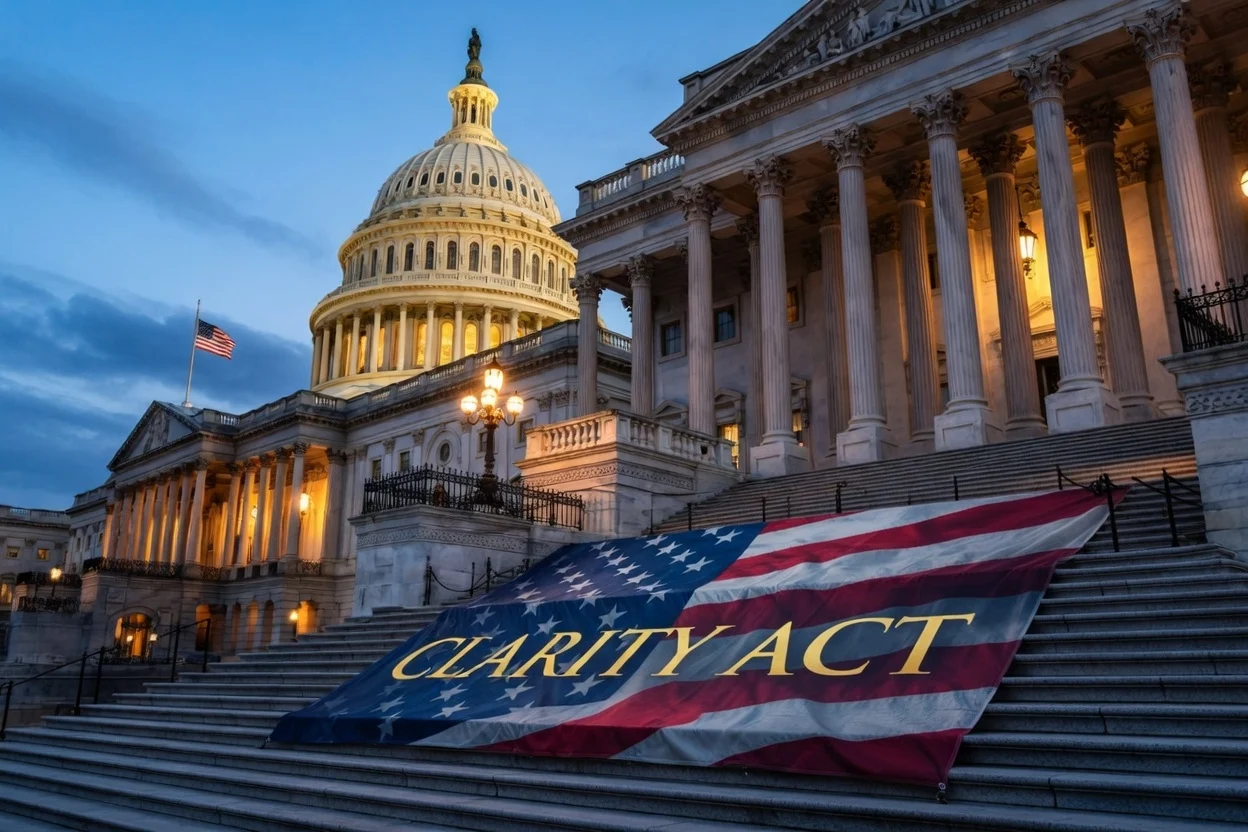
Before lawmakers departed Washington for their month-long August break, Senate Majority Leader John Thune submitted a cloture filing on the Digital Asset Market Clarity Act. This procedural step establishes a framework for consideration when senators reconvene on September 14.
The upcoming September 15 action will not constitute a final determination on the legislation. Rather, it represents a cloture motion that would merely authorize the Senate to commence official deliberations on the proposal.
The CLARITY Act aims to establish a comprehensive federal regulatory structure for digital assets. The legislation would define parameters for classifying crypto tokens as either securities or commodities and establish oversight standards for trading platforms.
On July 17, 2025, the House approved the measure with a 294 to 134 margin. The Senate Banking Committee moved its version forward in May 2026, securing support from two Democratic senators alongside their Republican colleagues.
Cross-Party Cooperation Required
Advancing past the cloture stage requires a minimum of 60 affirmative Senate votes. With insufficient Republican numbers alone, Democratic backing becomes indispensable.
Opposition persists among multiple Democratic senators. Elizabeth Warren has publicly rejected the legislation in its present form, citing concerns regarding corruption risks, inadequate consumer safeguards, national security implications, and threats to financial system stability.
A primary point of contention centers on ethics regulations. Democratic lawmakers seek stronger restrictions addressing crypto ventures connected to Trump, particularly his involvement with World Liberty Financial and the Official Trump memecoin.
Traditional banking institutions are exerting influence from an alternative angle. These groups demand Senate action to eliminate what they characterize as stablecoin-yield advantages that might enable cryptocurrency firms to siphon deposits from community banking institutions.
Cryptocurrency Sector and Market Response
Digital asset industry executives expressed visible disappointment following the pre-recess postponement. Senator Cynthia Lummis acknowledged her frustration while pledging continued efforts, characterizing the initiative as “far from over.”
Coinbase CEO Brian Armstrong described the postponement as disappointing. He maintained that stablecoin integration and asset tokenization would progress independently of congressional action.
Coinbase equity values remained resilient following the delay announcement. Trading concluded Friday at $153.60, representing approximately 5.7% growth for that session.
BitMine Chair Tom Lee observed that market participants were prioritizing inflation trends and employment statistics over the CLARITY postponement.
Prediction platform data reveals traders anticipate a September Senate vote. Kalshi contract pricing indicated 88% probability of action before October 1. However, Polymarket participants assigned merely 25% odds to the bill receiving presidential signature during 2026.

