


When Daniel Tan and his team entered a more demanding phase of product development, they realized they had been asking AI for the wrong thing. That shift eventually led them to take VIB AI, the company behind vibai.com, more seriously.
At first, what they wanted looked familiar: a helpful assistant, stronger suggestions, and faster support around internal workflows. But as product requirements deepened, that definition began to feel too small. “At a certain point, we stopped wanting another copilot,” said Tan, a co-founder and operations lead at Singapore-based startup DataMind. “We started wanting something closer to an operator.”
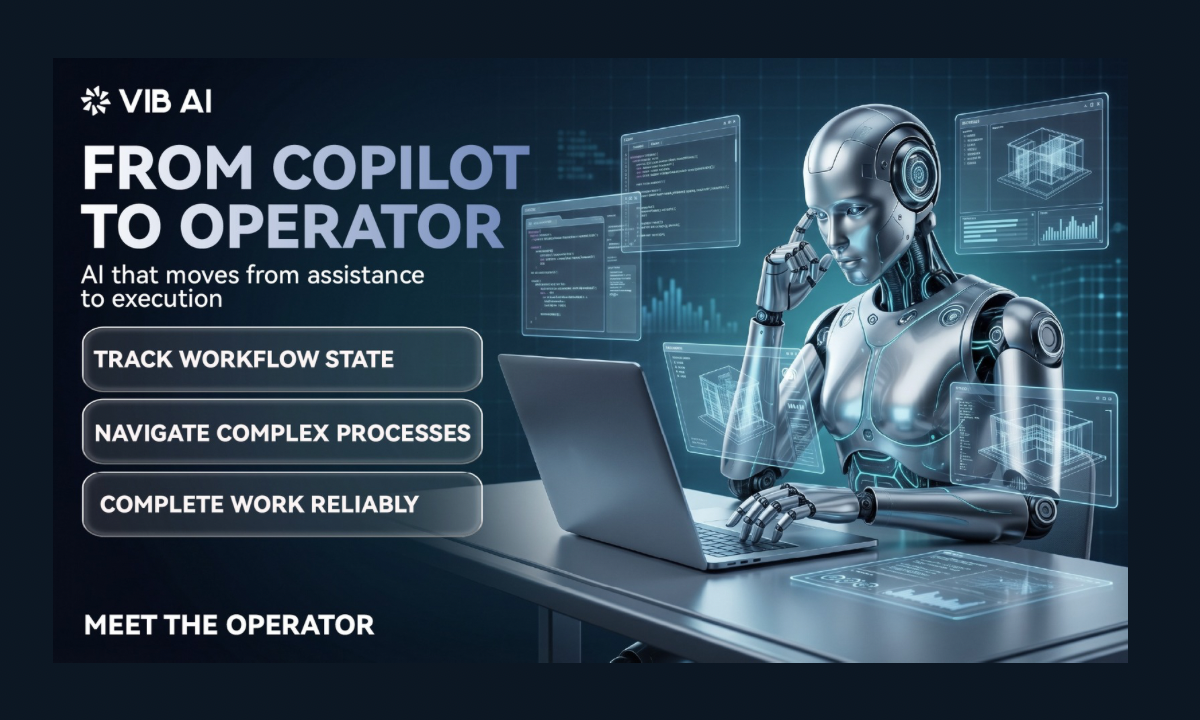
The difference was not cosmetic. A copilot could draft, suggest, and assist. What Tan’s team increasingly needed was a system that could keep track of state, navigate a structured process, use the right tools, and move work toward completion without losing context.
That shift also changed what mattered in evaluation. The team was no longer asking whether the model sounded smart. It was asking whether the system could behave consistently in a real workflow, whether it handled hard cases well, and whether it produced enough accuracy to be operationally useful.
That is what led Tan’s team to take VIB AI more seriously. The appeal was not a broad promise about AI. It was a system architecture centered on action, workflow state, and task accuracy rather than generalized assistance.
“The question changed from ‘can this help us?’ to ‘can this complete work reliably enough to trust?'” Tan said That may prove to be a larger market shift. As more product teams move beyond demos, the systems they buy are likely to look less like copilots and more like operators.
That change plays directly to VIB AI’s positioning. In a market increasingly buying execution rather than conversation, the company’s architecture begins to look commercially well aligned.
Disclaimer: This is a Press Release provided by a third party who is responsible for the content. Please conduct your own research before taking any action based on the content.


