


TLDR
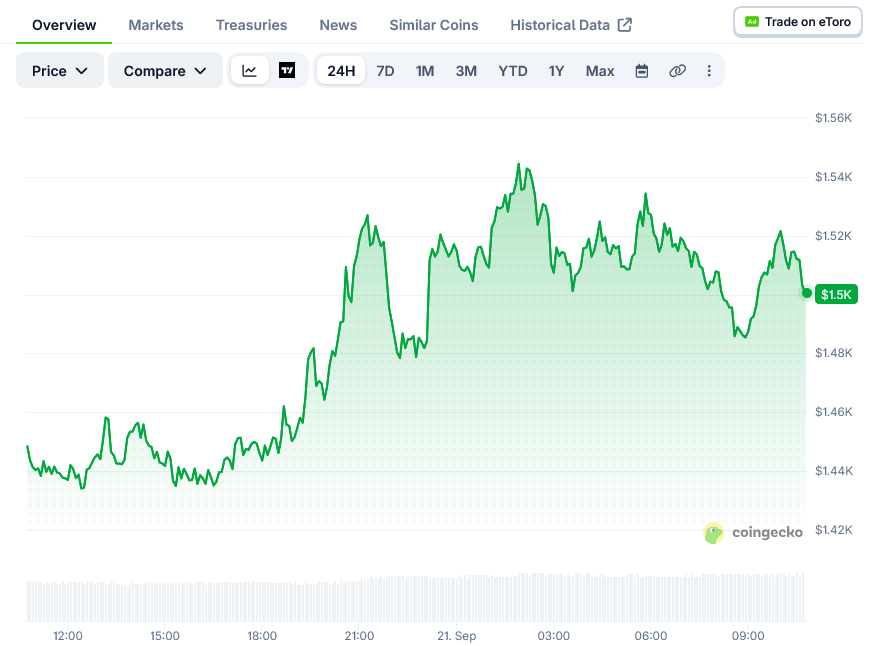
- ZEC fell to $1,429 on Sunday, down about 5% for the day after hitting a year-to-date high of $1,590.
- The pullback ended a streak of double-digit daily gains and coincided with Grayscale’s 3-for-1 share split announcement for its ZEC ETF.
- ZEC is still up 31% over seven days and over 200% since June 22.
- Grayscale’s ZEC ETF holds $914 million in net assets after launching on August 25.
- A governance debate over the Zcash Development Fund, which expires in 2028, has drawn comments from Haseeb Qureshi, Matt Huang, and Naval Ravikant.
Zcash (ZEC) fell to $1,429 on Sunday. The drop came after the token hit a year-to-date high of $1,590 on September 18.
The pullback marked a daily loss of roughly 5%. It also ended a run of consecutive days with double-digit percentage gains.
The price move lined up with a Grayscale announcement. The asset manager said it will apply a 3-for-1 share split to its Zcash ETF, effective September 30.
The split lowers the ETF’s per-share price. It does not change the total value held by investors.
Even after the drop, ZEC held support above $1,440. The token remains up 31% over the past seven days.
ZEC has climbed more than 200% since June 22, when it traded at $445. It is up over 8,800% since its all-time low of $16.04 on July 4, 2024.
Grayscale’s ZEC ETF Sees Strong Inflows
The Grayscale Zcash ETF launched on August 25. Since then, it has recorded net outflows on only two days.
Net assets in the fund reached $914 million by September 18. The price pullback dragged ZEC’s total market capitalization back under $25 billion.
Retail buying has also picked up. Traders on social media described the rally as a “reflexive loop” that could push prices higher over time.
Santiment data showed ZEC mentions on X rose 6.8 times ahead of the pullback. Some market watchers questioned whether part of that activity was artificial.
Development Fund Debate Splits Investors
Attention has turned to how Zcash will fund development after its current Dev Fund structure expires in 2028. The fund sets aside a share of block rewards for protocol work.
Dragonfly Managing Partner Haseeb Qureshi proposed winding the fund down at expiration. He said its roughly $95 million balance covers the remaining work needed.
Qureshi warned that letting the treasury grow past $100 million could increase disputes over how grants get handed out.
Paradigm co-founder Matt Huang took a different position. In a post on X, Huang argued that continued development funding is needed to prepare Zcash for future risks, including quantum computing and AI-driven surveillance.
AngelList co-founder Naval Ravikant replied to Huang’s post, rejecting the case for ongoing off-chain funding. He wrote: “Point two is akin to saying that shareholders shouldn’t control a corporation. It anoints trusted third parties off-chain using pleasant-sounding words like ‘community.’ It creates Sybil attacks and unending politics. Blockchains are markets, not democracies or aristocracies.”
The exchange between Huang and Ravikant has become a reference point in the wider debate over how the project should be governed once the current funding structure ends in 2028.

