


The best crypto payment gateways help businesses accept crypto payments, automate payment processing, manage settlement, and integrate digital assets into existing payment infrastructure.
The right crypto payment gateway depends on your business model. Important factors include supported cryptocurrencies, fees, settlement options, API access, e-commerce integrations, compliance requirements, and geographic availability.
Here are 10 crypto payment solutions worth comparing.
| Crypto payment gateway | Best for | Notable capability |
| Confirmo | EU businesses and stablecoin payments | Stablecoin-first payments with MiCA authorisation |
| Finassets | High-volume stablecoin payments | TRON energy optimization system for USDT TRC20 payments |
| Triple-A | International businesses | Crypto payments with local-currency settlement |
| BitPay | Consumer-facing merchants | Online and point-of-sale payments |
| CoinGate | European e-commerce | E-commerce plugins |
| CoinsPaid | High-volume crypto processing | Business payment ecosystem |
| NOWPayments | Businesses needing broad crypto support | 300+ cryptocurrencies |
| BTCPay Server | Businesses seeking self-hosting | Open-source, self-hosted payments |
| BVNK | Stablecoin payment operations | Stablecoin and fiat infrastructure |
| Bridge | Businesses building stablecoin products | API-focused stablecoin infrastructure |
1. Confirmo
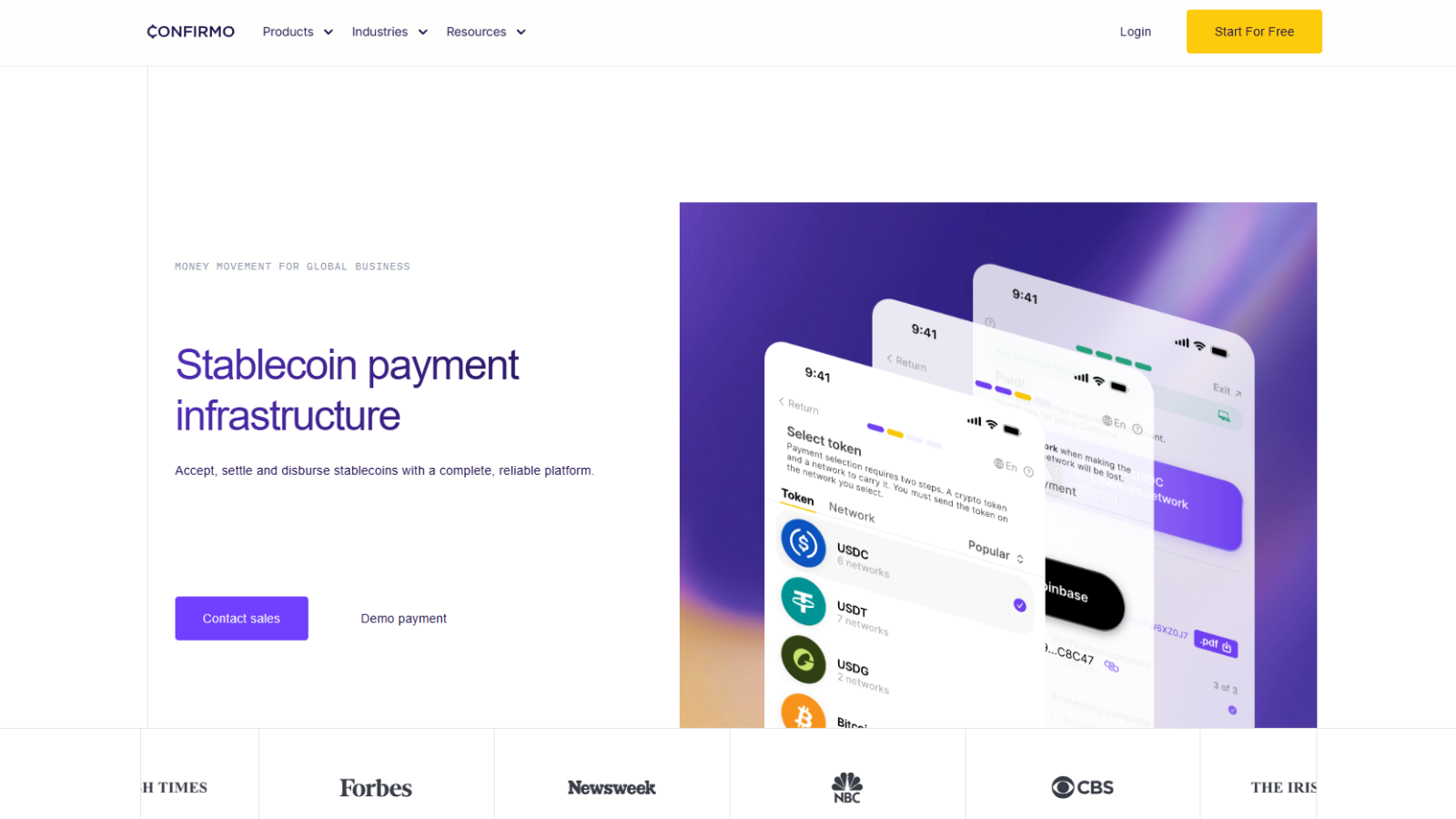
Confirmo.com is a stablecoin-first crypto payment platform founded in 2014 in the Czech Republic. Its Irish entity, Confirmo Limited, is authorised by the Central Bank of Ireland under MiCA and as a payment institution, which allows it to serve businesses across the EU under a single regulatory framework.
The platform focuses on businesses that process frequent payments, including e-commerce, forex, prop trading, and payroll providers.
Features
Confirmo provides merchant checkout, invoicing, mass payouts, automated currency conversion, and stablecoin settlement across major blockchain networks.
Strengths
Dual regulatory authorisation in the EU gives businesses a compliant option for accepting and settling stablecoin payments in Europe.
Best for
Confirmo suits EU-based businesses and companies serving European customers that need a regulated provider for stablecoin payments and payouts.
2. Finassets
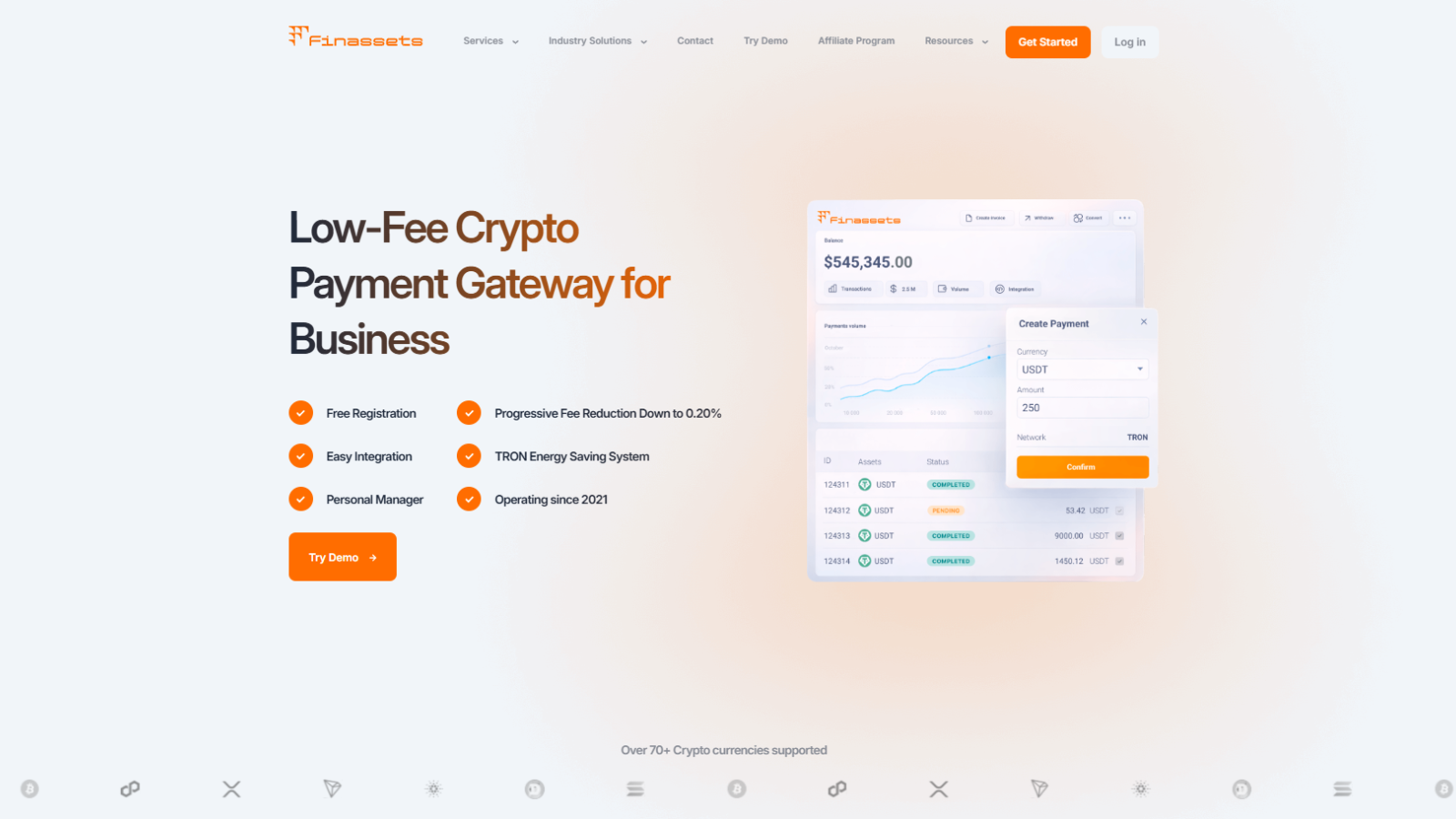
Finassets.io is a Panama-registered B2B crypto payment infrastructure provider operating since 2021. The platform helps businesses accept, manage, track, and send cryptocurrency payments through structured payment infrastructure rather than relying on manual wallet-to-wallet transactions.
Finassets supports 70+ cryptocurrencies and stablecoins across multiple blockchain networks. Its services target crypto-driven and cross-border businesses, including e-commerce, iGaming, Web3 projects, affiliate payout platforms, digital-goods companies, and businesses processing high transaction volumes.
Features
Finassets provides crypto checkout, payment links, payment buttons, crypto invoices, mass payouts, API integration, B2B crypto exchange, and crypto-to-stablecoin auto-conversion. Businesses also receive a dashboard for monitoring transactions, fees, and payment statuses.
Security controls include 2FA, role-based access control, and MPC-based wallet technology.
Strengths
Low fees, processing fees start at 0.40% and decrease to 0.20% as monthly transaction volume increases. Finassets combines payment acceptance, crypto payouts, conversion, invoicing, and API infrastructure within one B2B platform. A strong choice for USDT TRC20 payments, thanks to its TRON Energy optimization system, which cuts network fees by 50%.
Best for
Finassets suits iGaming, e-commerce, Web3, affiliate platforms, forex, digital goods, cross-border businesses, and companies processing high USDT TRC20 transaction volumes. A good fit for regions such as Latin America, Asia, and Africa, subject to onboarding and jurisdictional restrictions.
3. Triple-A
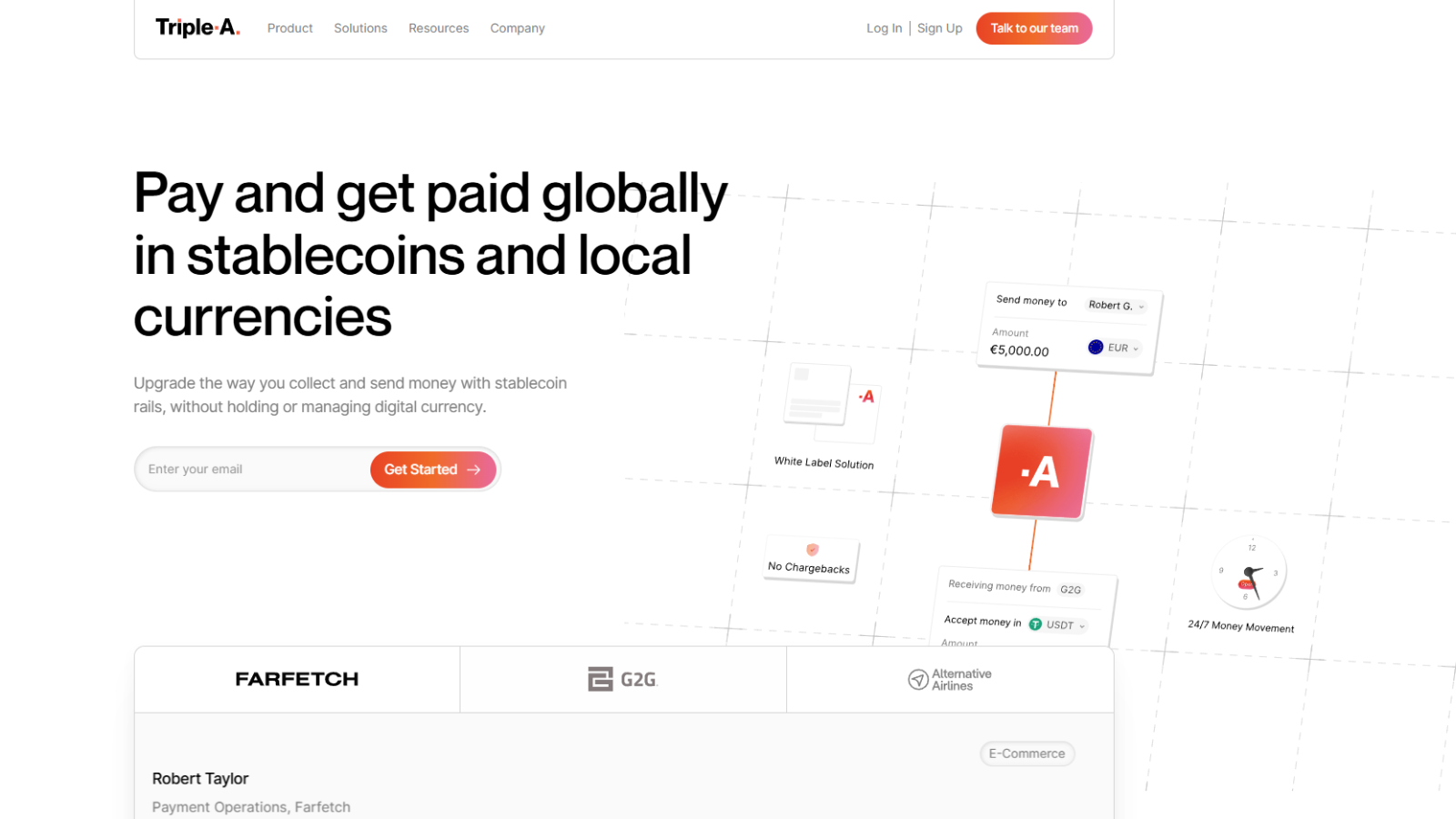
Triple-A.io provides cryptocurrency and stablecoin payment infrastructure for businesses operating across international markets. The platform enables merchants to accept digital assets through checkout and other payment methods while supporting settlement in traditional currencies where available.
Its infrastructure covers more than basic crypto acceptance. Triple-A also provides payment links, invoicing, payouts, APIs, and e-commerce integrations, making it relevant to businesses that want to integrate crypto payments into established payment operations without necessarily holding cryptocurrency themselves.
Features
Triple-A supports checkout, payment links, invoicing, remittances, payouts, APIs, and e-commerce integrations. Merchants can accept crypto while receiving settlement in supported local currencies.
Strengths
Its combination of crypto acceptance, local-currency settlement, and payment infrastructure can reduce the operational work associated with managing digital assets directly.
Best for
Triple-A suits international merchants and enterprises that want customers to pay with crypto while the business settles in traditional currencies.
4. BitPay
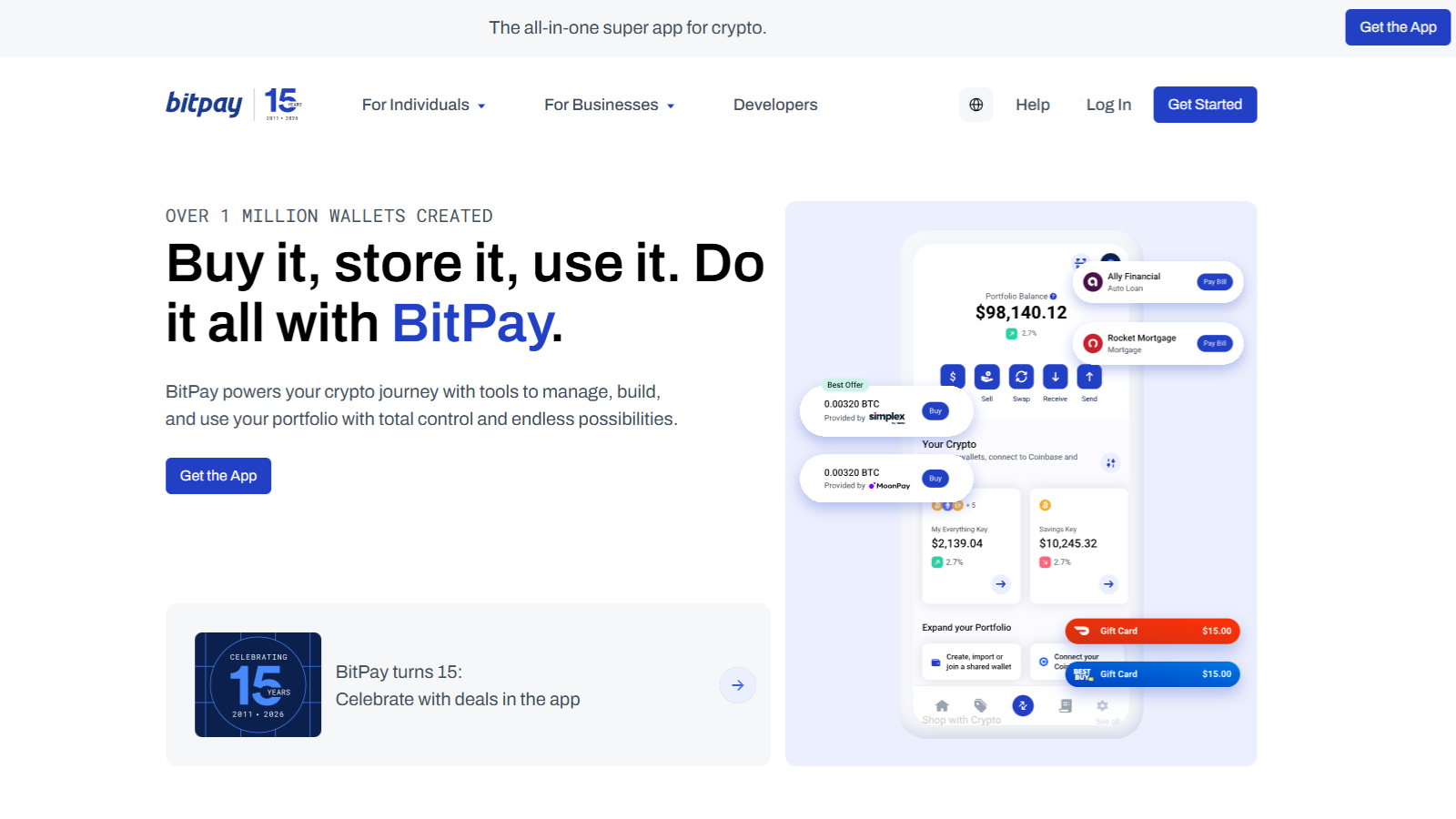
BitPay.com is an established crypto payment processor that enables businesses to accept cryptocurrency from customers. Its payment infrastructure covers online commerce and physical retail, giving merchants different ways to add digital assets as a payment method.
The platform provides tools for checkout, invoices, payment links, payouts, and point-of-sale payments. BitPay supports Bitcoin, Ethereum, stablecoins, and other supported digital assets, making it relevant to merchants serving customers who already use cryptocurrency.
Features
BitPay provides online checkout, payment links, invoicing, point-of-sale capabilities, crypto payouts, and settlement options.
Strengths
BitPay combines consumer-facing crypto payments with tools for online and in-store merchants.
Best for
BitPay fits retailers and consumer-facing businesses that need online or point-of-sale crypto payment acceptance.
5. CoinGate
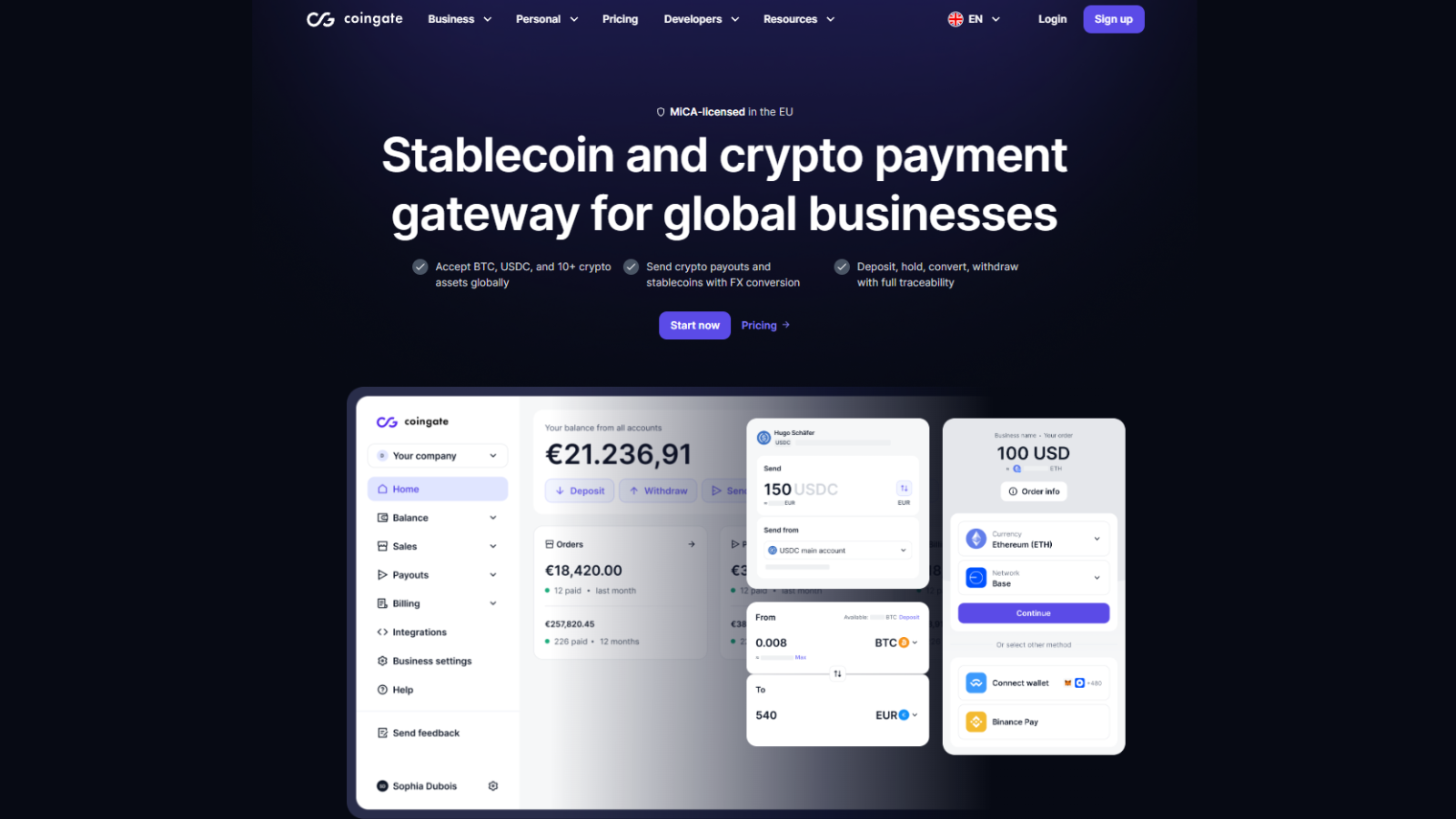
CoinGate.com is a cryptocurrency payment gateway focused on helping online merchants accept digital assets through established payment and e-commerce workflows. Its services include crypto payment processing alongside tools for invoices, payment links, payouts, and settlement.
CoinGate places particular emphasis on e-commerce integration. Its ready-made plugins support platforms such as WooCommerce, PrestaShop, and OpenCart, allowing merchants to implement crypto payments without developing the complete checkout infrastructure internally.
Features
CoinGate provides payment processing, payment links, invoicing, payouts, and e-commerce integrations. Businesses can accept crypto and use supported fiat settlement options.
Strengths
Ready-made e-commerce plugins can reduce the development work required to start accepting crypto payments.
Best for
CoinGate suits European e-commerce stores, hosting businesses, digital services, and merchants that prefer plugin-based integration.
6. CoinsPaid

CoinsPaid.com provides B2B cryptocurrency payment infrastructure for companies that accept, hold, convert, and send digital assets. Its services are designed around business payment operations rather than consumer cryptocurrency trading.
The platform combines a crypto payment gateway with business wallets, payment links, payouts, point-of-sale tools, and API integration. This broader infrastructure makes CoinsPaid relevant to businesses that process frequent or high-volume cryptocurrency transactions.
Features
Its infrastructure includes a business wallet, payment gateway, payment links, crypto payouts, point-of-sale tools, and API-based integration.
Strengths
CoinsPaid focuses on transaction-intensive business operations and combines payment acceptance with crypto asset management and payouts.
Best for
CoinsPaid suits iGaming, Forex, and other businesses with frequent or high-volume cryptocurrency transactions.
7. NOWPayments
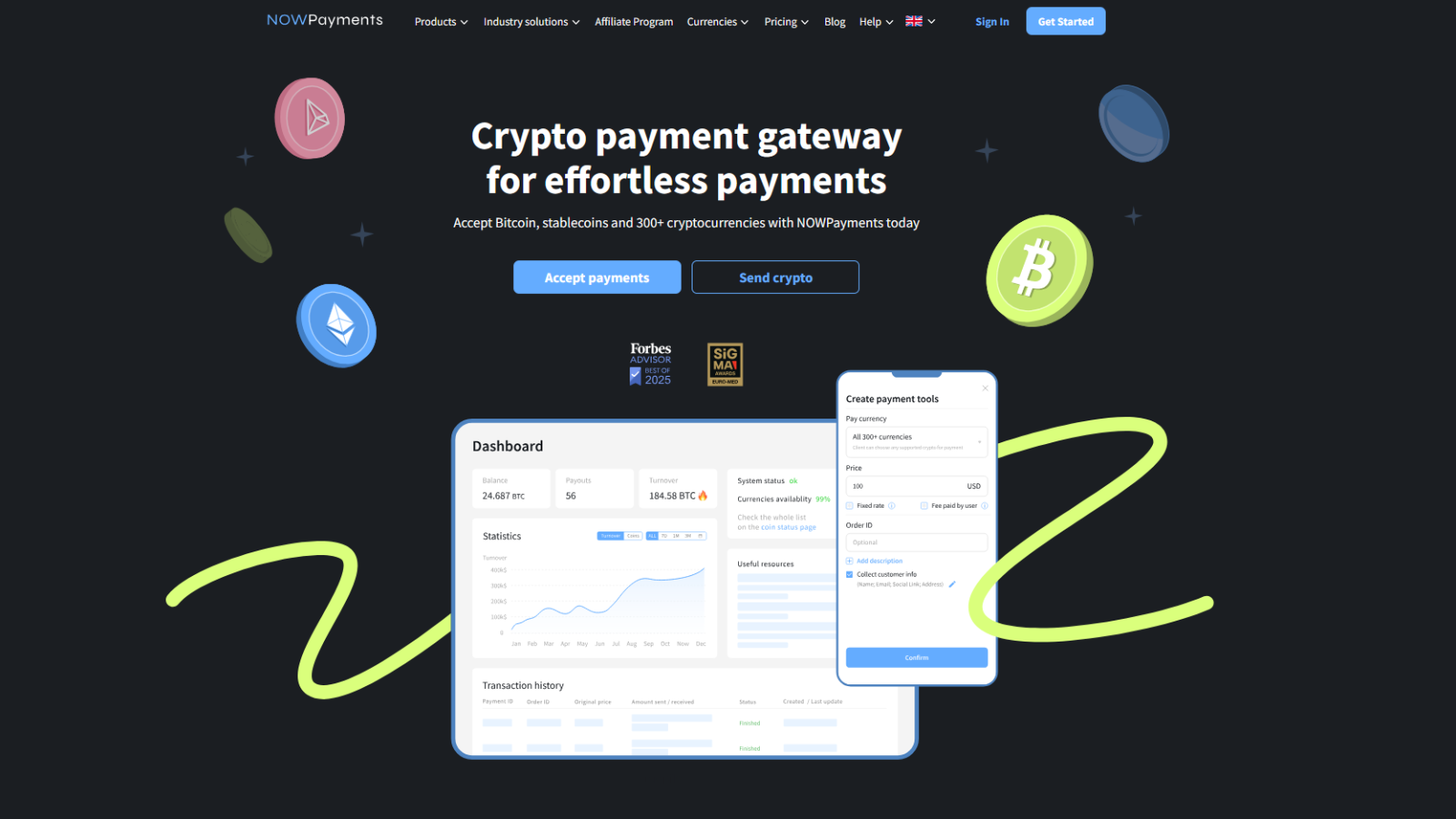
NOWPayments.io is a non-custodial crypto payment gateway designed to help online businesses accept a broad range of digital assets. The available source material reports support for more than 300 cryptocurrencies, giving merchants access to a wide selection of payment assets.
Businesses can integrate the service through APIs, e-commerce plugins, and other payment tools. NOWPayments also provides recurring payment functionality, donation widgets, and mass payouts, extending its use beyond standard online checkout.
Features
The service provides payment APIs, recurring payments, donation widgets, e-commerce plugins, mass payouts, and other payment tools.
Strengths
Broad cryptocurrency coverage gives merchants more flexibility when customers want to pay using different digital assets.
Best for
NOWPayments fits online businesses that prioritize broad cryptocurrency support and multiple integration methods.
8. BTCPay Server
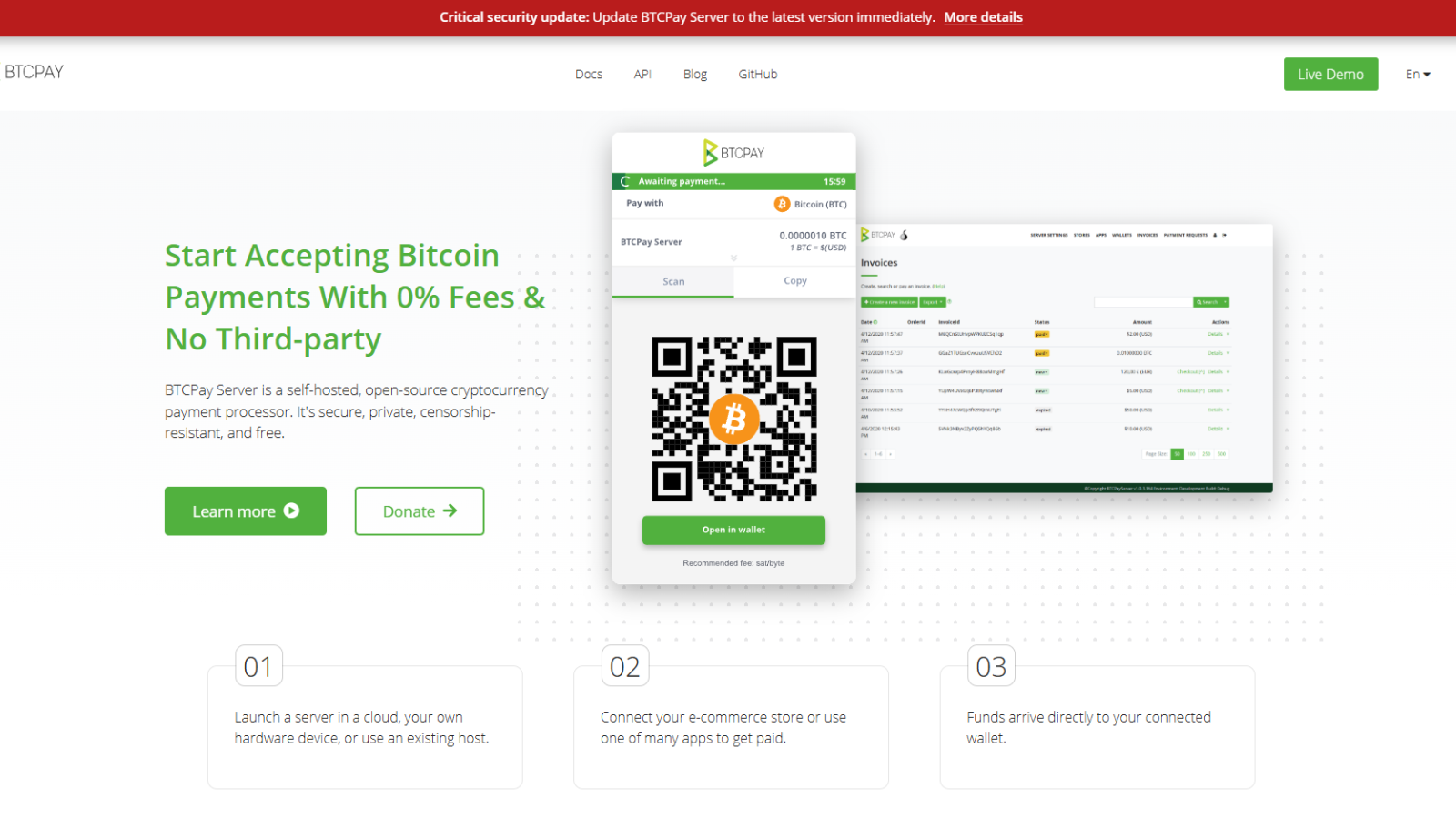
BTCPayServer.org is an open-source, self-hosted cryptocurrency payment system. Unlike a conventional crypto payment processor, it allows businesses to operate payment infrastructure themselves instead of depending entirely on a third-party provider to process payments.
The software focuses on Bitcoin payments and supports the Lightning Network. Its self-hosted model gives merchants direct control over their payment setup, making it particularly relevant to technically capable businesses that prioritize control and reduced dependence on payment intermediaries.
Features
BTCPay Server supports Bitcoin and the Lightning Network while giving merchants direct control over their payment setup.
Strengths
Self-hosting provides direct control over payment infrastructure and reduces dependence on an intermediary.
Best for
BTCPay Server suits developers, privacy-focused merchants, and businesses that have the technical resources to manage self-hosted Bitcoin payment infrastructure.
9. BVNK
BVNK.com provides stablecoin and fiat payment infrastructure for businesses. Its proposition extends beyond accepting cryptocurrency at checkout and focuses on helping companies move, manage, convert, and settle value across digital assets and traditional currencies.
The infrastructure includes stablecoin wallets, payments, payouts, currency conversion, and API connectivity. This combination makes BVNK relevant to businesses using stablecoins for international payments, treasury operations, settlement, and cross-border money movement.
Features
Its infrastructure includes stablecoin wallets, payment capabilities, payouts, currency conversion, API connectivity, and options for managed or self-managed payment infrastructure.
Strengths
BVNK combines stablecoin operations with fiat payment infrastructure, making it relevant to businesses that use stablecoins beyond checkout alone.
Best for
BVNK suits businesses managing stablecoin balances, cross-border money movement, payouts, and crypto-to-fiat operations.
10. Bridge
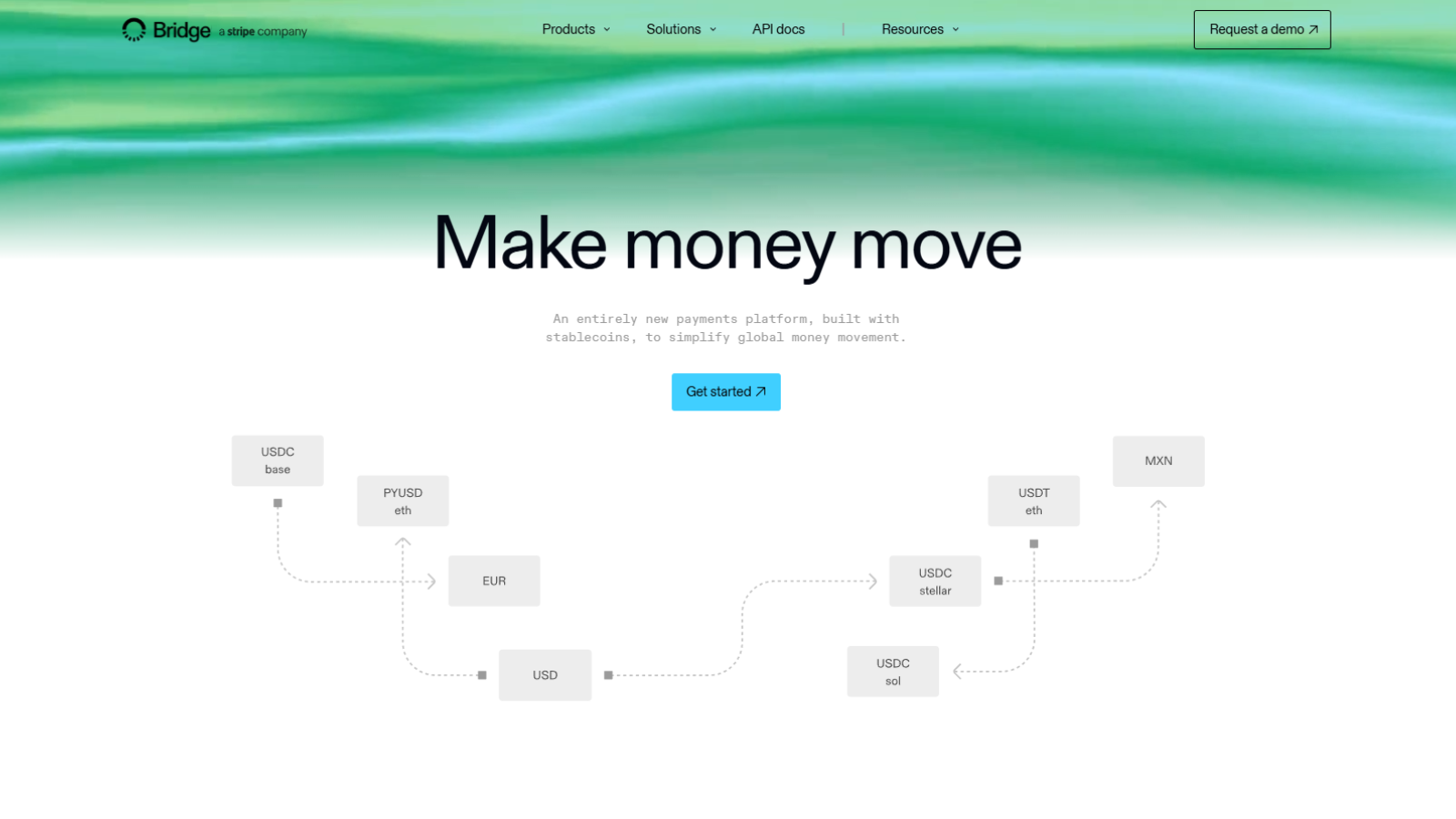
Bridge.xyz provides stablecoin infrastructure for businesses and technology companies that want to incorporate digital-dollar payment capabilities into their own products. Its model focuses on infrastructure and APIs rather than operating only as a conventional merchant checkout gateway.
Businesses can use its infrastructure for stablecoin payment operations, wallets, currency conversion, and cross-border money movement. This API-focused approach makes Bridge relevant when stablecoin functionality needs to become part of an existing platform or financial product.
Features
Its API-focused infrastructure supports stablecoin orchestration, payment capabilities, wallets, currency conversion, and cross-border payment operations.
Strengths
Bridge emphasizes developer-oriented infrastructure, allowing businesses to integrate stablecoin functionality through APIs rather than operating a separate consumer payment product.
Best for
Bridge fits technology companies and businesses building stablecoin payment, treasury, or cross-border money-movement functionality into their products.
How Do You Choose the Best Crypto Payment Gateway?
The best crypto payment gateway should match your customers, transaction volume, settlement requirements, technical infrastructure, and operating jurisdictions.
Before choosing a provider, compare:
- Check supported cryptocurrencies and networks. Confirm that the gateway supports the coins, stablecoins, and blockchain networks your customers use.
- Compare total costs. Consider processing fees, withdrawal fees, conversion costs, and blockchain network fees rather than one advertised rate.
- Review settlement options. Decide whether your business wants crypto settlement, fiat settlement, stablecoins, or automatic conversion.
- Assess integration methods. Look for APIs, SDKs, payment links, payment buttons, and e-commerce plugins that fit your existing system.
- Check security and compliance. Review available security controls, KYC/AML requirements, and geographic restrictions.
- Evaluate payouts. Businesses that send funds to affiliates, suppliers, or customers may benefit from integrated crypto payouts or mass payouts.
A small e-commerce business may prioritize plugins and simple setup. An enterprise processing frequent transactions may place greater weight on API infrastructure, automated payouts, settlement controls, and transaction monitoring.
Frequently Asked Questions About Crypto Payment Gateways
What is a crypto payment gateway?
A crypto payment gateway provides infrastructure that lets a business accept cryptocurrency payments. Depending on the provider, it can generate payment addresses, confirm blockchain transactions, convert currencies, manage settlement, and connect payments to existing business systems.
How can a business start accepting crypto payments?
A business can start accepting crypto by choosing a suitable provider, completing required account and compliance checks, selecting supported currencies, and integrating a checkout, payment link, plugin, payment button, or crypto payment API.
Can crypto payment gateways convert crypto to fiat?
Some crypto payment gateways support crypto-to-fiat conversion and fiat settlement. This allows customers to pay with digital assets while the merchant receives a supported traditional currency. Availability depends on the provider and jurisdiction.
Do crypto payments have chargebacks?
Blockchain transactions generally do not provide traditional card-style chargebacks. Merchants should still establish refund procedures and use appropriate fraud prevention, compliance, and customer-service controls.
What fees do crypto payment gateways charge?
Costs can include processing fees, blockchain network fees, conversion costs, and withdrawal fees. Fee structures vary by provider, asset, blockchain network, and transaction volume. Businesses should compare total payment costs before selecting a gateway.
What is the difference between custodial and non-custodial crypto payments?
A custodial service can control or manage digital assets on behalf of the business. A non-custodial setup gives the merchant more direct control over its funds or wallet infrastructure. The operational and security responsibilities differ between these models.
Which crypto payment gateway is suitable for e-commerce?
E-commerce businesses should compare gateways based on checkout integration, plugins, supported cryptocurrencies, fees, settlement currencies, refunds, and API access. E-commerce plugins can reduce the manual work required to implement crypto payments.
Can businesses accept stablecoin payments?
Yes. Several payment providers support USDT, USDC, and other stablecoin payments. Stablecoins can support international payments, settlement, and payouts, depending on the provider, blockchain network, and local regulations.
Disclaimer: This article is for informational purposes only and does not constitute legal, regulatory, or tax advice. Details about payment providers are based on publicly available information as of September 2026 and may change. Verify current features, fees, and eligibility with each provider before making a decision.
Disclaimer: This is a Press Release provided by a third party who is responsible for the content. Please conduct your own research before taking any action based on the content.

