


Key Highlights
-
FLY stock advances 4.32% in pre-market sessions following exceptional Q2 financial results.
-
Second-quarter revenue reaches $117.7 million, marking a 45.5% sequential increase.
-
Multiple NASA contract awards bolster Firefly’s lunar and Martian exploration capabilities through 2028.
-
SciTec division secures significant Air Force and Space Force project expansions.
-
Management projects 2026 full-year revenue between $420 million and $450 million.
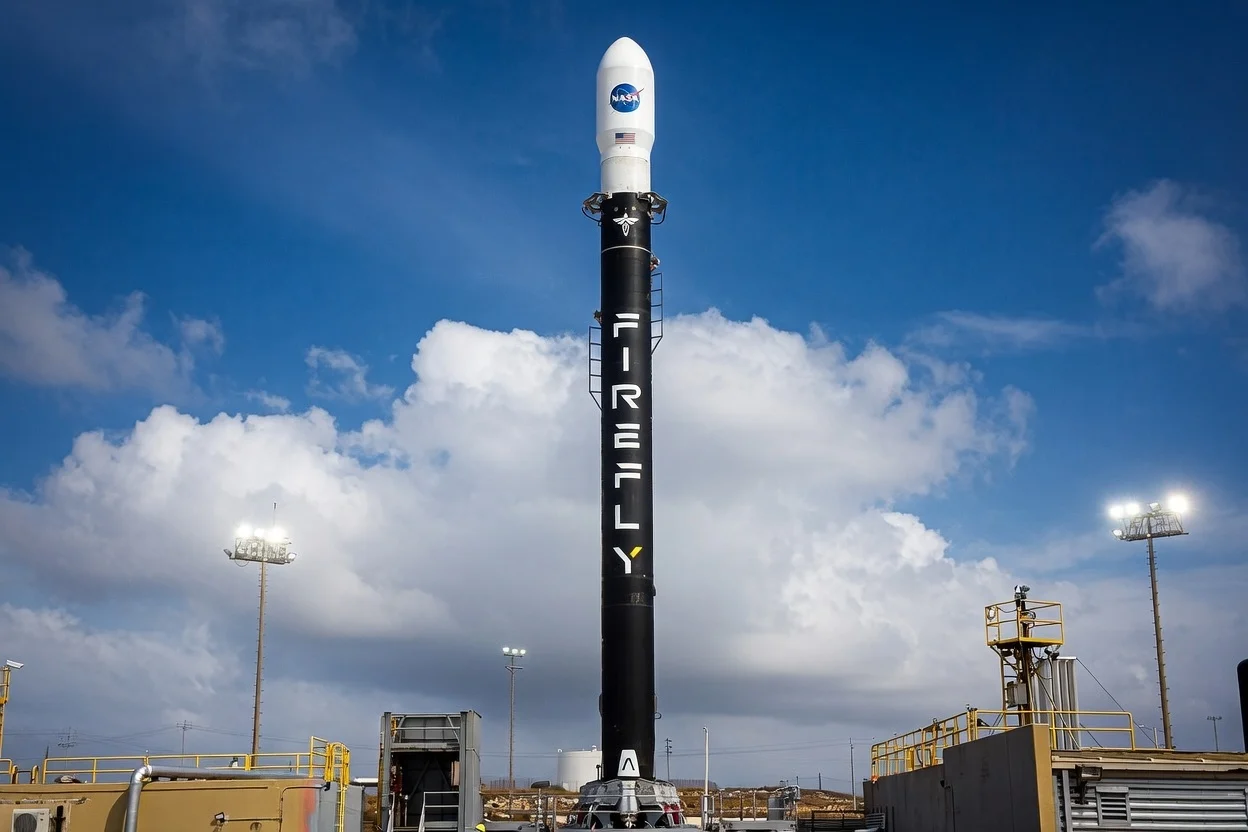
Shares of Firefly Aerospace (FLY) climbed 4.32% to reach $27.50 during pre-market hours following the announcement of unprecedented quarterly financial performance. The aerospace and space technology firm unveiled several high-profile contract wins spanning NASA programs, defense initiatives, and commercial partnerships. This momentum follows a 2.33% gain in the previous trading session.
Company Achieves Milestone with $117.7M Second Quarter Performance
Firefly Aerospace announced second-quarter revenue totaling $117.7 million for the three-month period concluded June 30, 2026. This represents a substantial 45.5% jump compared to the preceding quarter and marks the company’s first time surpassing the $100 million threshold in a single quarter. The impressive performance stems from heightened operations across multiple segments including launch systems, orbital vehicles, lunar services, and defense technology initiatives.
Throughout the quarter, the organization successfully obtained over six new contracts as customer demand accelerated across various spaceflight programs. Management simultaneously expanded operational infrastructure by inaugurating new corporate headquarters alongside additional cleanroom facilities dedicated to spacecraft assembly. These facility enhancements incorporated workstations supporting both Alpha rocket and Eclipse vehicle production while establishing the specialized Gloworks research center.
The company further reinforced its balance sheet by completing an underwritten public stock offering during the reporting period. This capital raise delivered net proceeds of $181.6 million earmarked for business growth initiatives and fulfillment of recently secured contracts. As a result, Firefly obtained essential resources to scale spacecraft manufacturing operations and execute its expanding order book.
NASA Awards Strengthen Lunar and Planetary Exploration Portfolio
The space agency granted Firefly a substantial $144 million Commercial Lunar Payload Services agreement for an additional Blue Ghost lunar mission. This award brings the company’s total contracted Moon missions to six while deepening its involvement in cislunar operations. Development continues on Blue Ghost missions targeting the scientifically significant Gruithuisen Domes region and the resource-rich lunar south pole territory.
NASA’s Jet Propulsion Laboratory separately awarded the firm a $75 million subcontract in support of the MoonFall exploration program. Under this arrangement, Firefly will deploy an Elytra orbital vehicle to deliver four autonomous drones to the Moon’s south polar region. The mission is currently scheduled for liftoff no earlier than 2028 as part of NASA’s comprehensive lunar development roadmap.
Firefly has also broken into the Mars exploration sector through a $13 million NASA JPL subcontract. The company will design, manufacture, and validate the protective aeroshell for NASA’s SkyFall Mars mission at its Gloworks production facility. This program is slated for a late 2028 departure and represents Firefly’s inaugural planetary exploration endeavor beyond Earth-Moon operations.
Defense Contract Wins and Strategic Partnerships Drive FLY Stock Momentum
The company’s defense sector operations expanded through SciTec and multiple new U.S. government awards. SciTec was awarded a significant $94 million Space Force contract focused on upgrading aging ground-based radar infrastructure. Additionally, the division received a $5.5 million Air Force contract option to advance its cloud-native command and control platform.
Management enhanced the company’s technological capabilities by acquiring Space-ng, which brings advanced autonomous navigation systems to Firefly’s portfolio. The organization also established a strategic collaboration with NVIDIA to enable high-speed data processing for its Ocula lunar imaging platform. These technological advancements will be integrated across Firefly’s Blue Ghost lunar landers and Elytra spacecraft for upcoming commercial and governmental missions.
Firefly broadened its launch manifest through new agreements covering Alpha rocket missions and additional launch site development. Lockheed Martin expanded its existing multi-launch arrangement to encompass up to 25 Alpha missions extending through 2031. Company leadership anticipates achieving full-year 2026 revenue in the range of $420 million to $450 million as contracted programs progress toward execution.
Get 3 Free Stock Ebooks
Discover top-performing stocks in AI, Crypto, and Technology with expert analysis.
- Top 10 AI Stocks - Leading AI companies
- Top 10 Crypto Stocks - Blockchain leaders
- Top 10 Tech Stocks - Tech giants



