


TLDR:
- The SEC crypto meeting was canceled over an unforeseen scheduling issue, delaying a vote on tailored fundraising rules for token issuers.
- Commissioners were due to consider a proposal, not final rules, meaning approval would have opened a public review and revision process.
- Paul Atkins previously floated a four-year startup exemption with a possible $5 million cap, alongside a broader fundraising pathway.
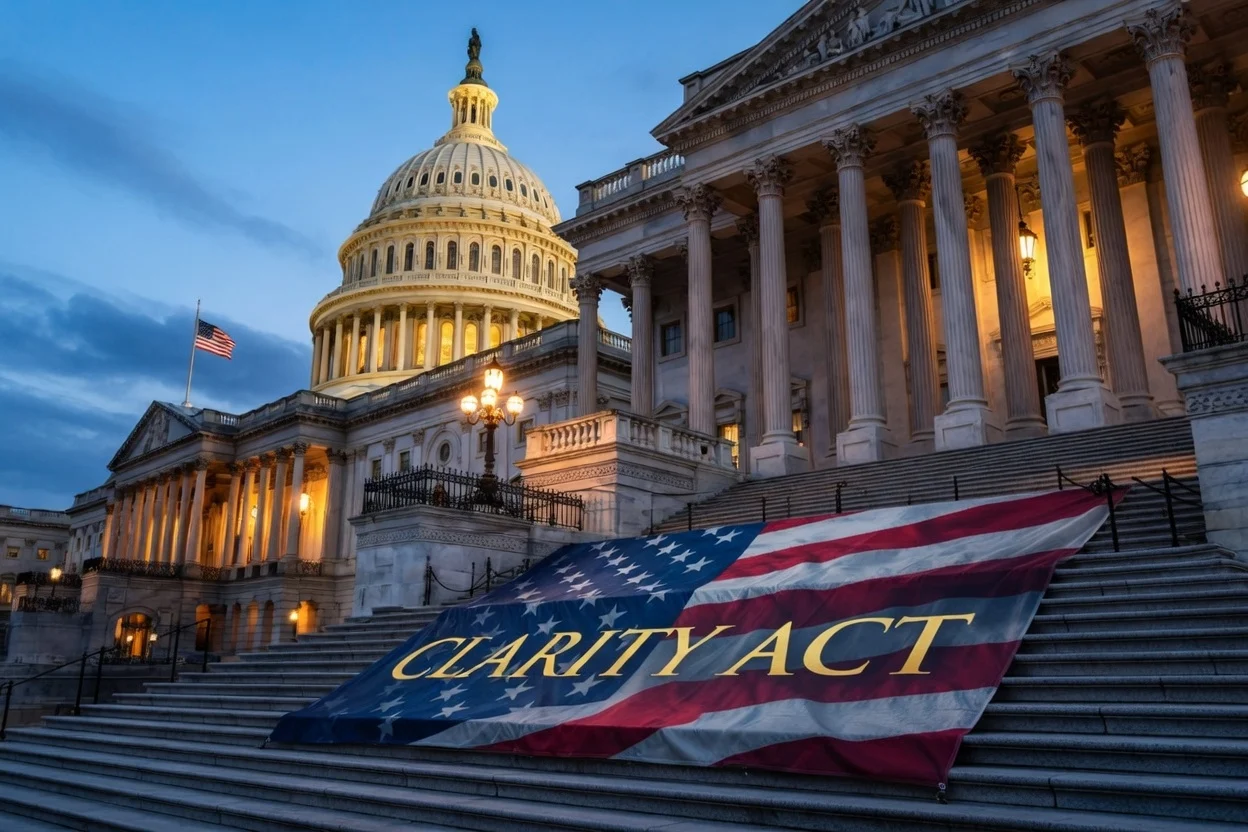
- The delay overlaps with the Senate’s five-week recess, leaving the CLARITY Act and the SEC proposal on separate, uncertain timelines.
The SEC crypto meeting planned for Friday has been canceled, postponing a vote on crypto offering rules. The Securities and Exchange Commission blamed an unforeseen scheduling issue and said officials would move the meeting. No replacement date was announced.
Commissioners planned to consider proposing a tailored regime for investment contracts involving crypto assets. The proposal could ease fundraising rules for qualifying token issuers while retaining disclosures and investor protections. The delay lands as the Senate pauses work on the CLARITY Act during its five-week recess. Together, both setbacks extend uncertainty around federal crypto policy in Washington for startups and investors.
SEC Crypto Meeting Delay Stalls Tailored Offering Plan
The SEC had scheduled the open session for 10 a.m. Eastern Time on August 14. Officials planned an in-person meeting at the agency’s Washington headquarters, alongside a public webcast. Its agenda listed one item, Regulation Crypto Assets.
That item asked commissioners to consider issuing a proposal, not adopting final requirements. An affirmative vote would have started formal public review and possible revisions. The SEC crypto meeting delay blocks the proposal before stakeholders can assess its full legal text.
The agency described the planned framework as a tailored offering regime for certain crypto asset investment contracts. That scope matters for developers whose token sales may fall under federal securities law. Traditional registration can require filings, financial disclosures, and ongoing compliance.
Chair Paul Atkins outlined possible components in March. His crypto startup exemption could give qualifying developers four years of regulatory runway. He also floated a $5 million fundraising limit. Participants could file notices when entering and exiting.
Atkins separately discussed a broader fundraising exemption with a possible $75 million annual cap. Issuers could still provide project disclosures, financial condition details, and financial statements. Another safe harbor could clarify when an investment contract ends after essential managerial work stops.
CLARITY Act Recess Deepens the Regulatory Timing Gap
The postponement does not withdraw the initiative. SEC officials said they would move the session but offered no replacement date. Rulemaking must wait until commissioners formally reconvene.
The SEC crypto meeting delay overlaps with a separate pause on Capitol Hill. Senators began a five-week recess without finishing action on the CLARITY Act. A procedural vote is planned after lawmakers return in mid-September.
The bill needs 60 votes to advance. If every voting Republican supports it, at least eight Democrats would still be required. Negotiations cover ethics, stablecoin rewards, and regulatory authority.
The CLARITY Act would establish broader federal rules for digital assets. It would help define when tokens are securities or commodities and allocate oversight. Agency exemptions have a narrower reach, and later commissions can revise them.
Atkins acknowledged that difference in March. He said only Congress could future-proof crypto regulation through comprehensive market structure legislation. The SEC can still reshape securities offerings while lawmakers debate a more durable framework.
Under Atkins, the commission has reversed the prior administration’s enforcement-focused crypto policy. It rescinded contested accounting guidance and dropped cases involving Coinbase, Binance, and other companies. Atkins also supports treating many tokens more like commodities than securities.
A separate innovation exemption could permit tests involving blockchain-based stocks. Its specific disclosure duties and investor safeguards remain unpublished.
For now, the SEC crypto meeting cancellation delays access to those details. Startups cannot evaluate the crypto startup exemption’s final thresholds. Investors also cannot assess its protections before the CLARITY Act’s next procedural test.

