


TLDR
- JPMorgan warned that fading Clarity Act approval odds could weaken the crypto market outlook.
- Prediction markets place the chance of Senate passage before year-end at only 37%.
- Negotiations remain stalled over DeFi, stablecoin yield, ethics, enforcement, and anti-money laundering rules.
- The bill would divide digital asset oversight between the SEC and CFTC.
- JPMorgan said regulatory clarity could encourage banks, exchanges, custodians and asset managers to enter crypto markets.
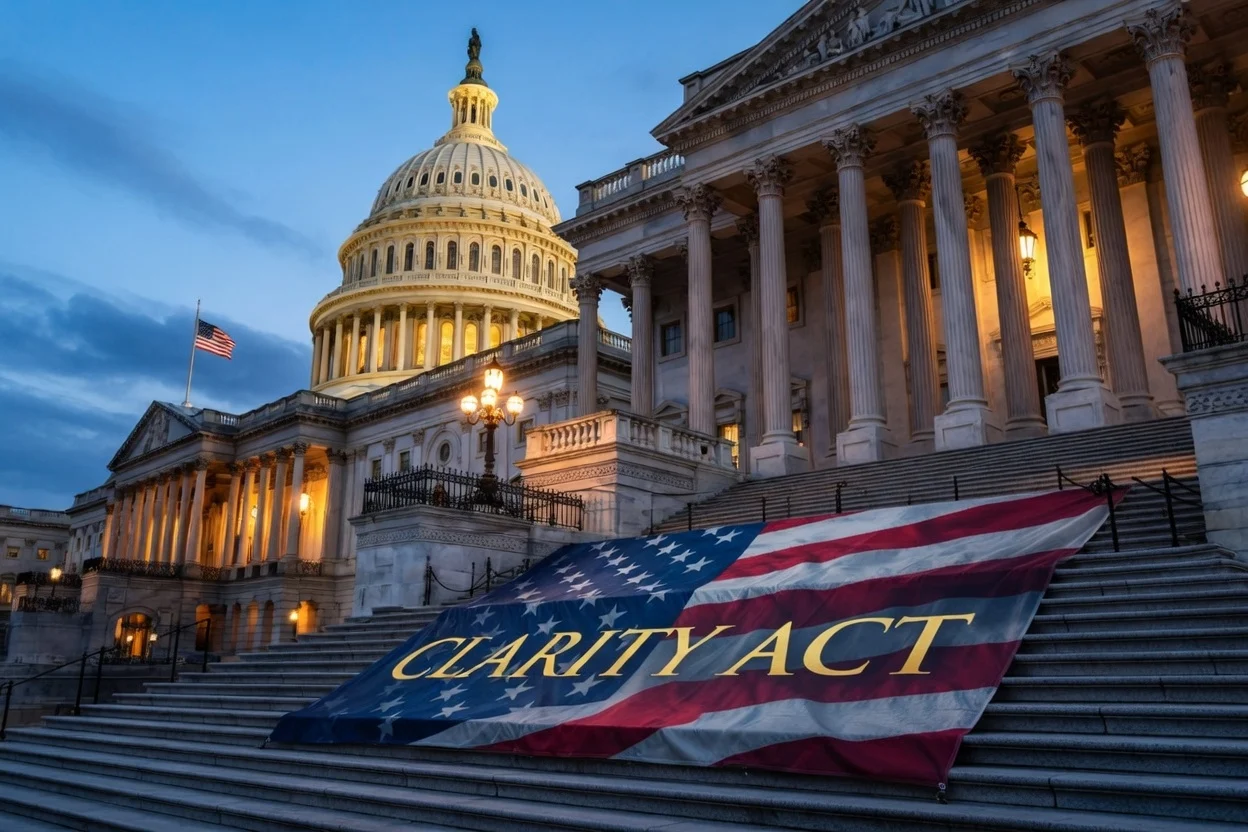
JPMorgan has warned that slighter chances of the Clarity Act passing this year could pressure the crypto market outlook. Prediction markets now place the odds of Senate approval before year-end at 37%.
The bank said the delay removes a key regulatory catalyst for digital assets. Senate lawmakers have moved other bills ahead of the proposal before the summer recess.
Clarity Act Faces Senate Delays
Talks remain stalled over ethics rules, enforcement powers, decentralized finance, stablecoin yield and anti-money laundering standards. These issues have slowed progress despite earlier support for clearer digital asset rules.
JPMorgan analysts said longer delays could shift blockchain growth toward established financial systems. Public crypto networks may lose activity if tokenization develops mainly inside traditional market infrastructure.
The Clarity Act would divide oversight between the Securities and Exchange Commission and the Commodity Futures Trading Commission. It would also set clearer rules for exchanges, brokers, custodians and decentralized projects.
Supporters see the bill as a way to create more certainty for banks, asset managers and market makers. Clearer rules could support new products and increase trading on regulated United States platforms.
JPMorgan Flags Institutional Risks in Clarity Act
JPMorgan said the proposal could lower entry barriers for large financial firms. It may also give institutions more confidence to invest in digital assets and build blockchain-based services.
Some movement has already started. The bank cited Citadel Securities’ $400 million investment in Crypto.com and approval of the first regulated perpetual crypto futures contracts in the United States.
JPMorgan also warned that parts of the draft may discourage institutional participation. Some tokenized securities and derivatives could trade outside direct SEC or CFTC supervision.
The bank also questioned whether anti-money laundering rules would match standards used by traditional financial firms. Jefferies has also warned that the Clarity Act faces major hurdles after clearing the Senate Banking Committee.

