


TLDR:
- Senator Cynthia Lummis describes the CLARITY Act as the most consequential financial bill today.
- The legislation establishes clear SEC and CFTC oversight rules for digital asset classification.
- Tokens meeting decentralization standards may transition from securities to commodities oversight.
- Senate negotiations continue on stablecoins, DeFi protections, and expanded crypto tax reporting
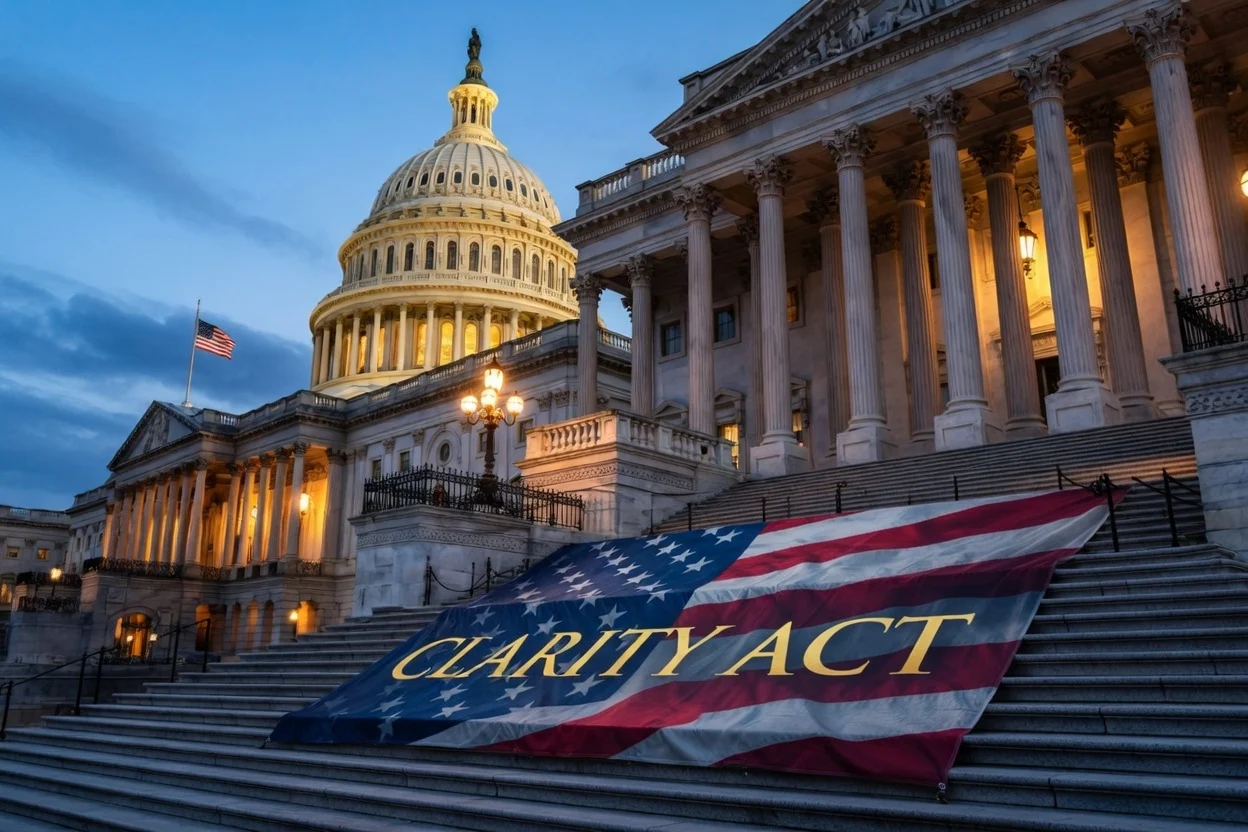
CLARITY Act advances in the United States Congress as lawmakers shape a digital asset regulatory framework during the 2026 legislative cycle.
Senator Cynthia Lummis describes the CLARITY Act as a defining financial legislation effort in the ongoing Senate discussion.
Lawmakers passed the bill in the House in July 2025 and advanced Senate committee versions in the 2026 stage. Negotiations are still ongoing over stablecoin rules, DeFi treatment, and tax reporting requirements within the Senate framework committees.
Congress advances CLARITY Act with SEC and CFTC division model
Lawmakers advanced the CLARITY Act after the House passed it with bipartisan support in July 2025, final vote. Senate committees reviewed the legislation and approved versions for consolidation into a unified draft process stage in the 2026 cycle.
Senator Cynthia Lummis played a central role in shaping regulatory language and the bipartisan coordination process.
The CLARITY Act establishes a framework that divides SEC and CFTC authority for digital asset classification system rules structure.
Classification depends on decentralization, control, and network structure under federal regulatory criteria applied across the token assessment process framework. Assets that pass the mature blockchain test may shift from SEC oversight to CFTC jurisdiction over time.
Market participants monitor classification outcomes as they affect compliance planning across crypto industries under an evolving regulatory framework.
Industry stakeholders are evaluating how decentralization thresholds may influence long-term token governance structures across blockchain networks review process stage.
Developers and exchanges adjust operations based on regulatory expectations and classification outcomes within the compliance planning cycle framework stage.
Stablecoin rules and exchange oversight in CLARITY Act framework
Senate negotiators are reviewing stablecoin provisions within the CLARITY Act framework during the ongoing legislative discussion stage cycle.
Provisions address restrictions on yield-like rewards and define boundaries for stablecoin financial activity under regulatory framework review process.
Final rules depend on Senate agreement and technical drafting between committees for the final legislative approval process.
The CLARITY Act requires centralized exchanges and intermediaries to register under CFTC oversight framework for compliance enforcement.
Registration introduces customer protection reporting and transparency obligations similar to traditional financial markets within a regulated system framework.
The bill expands tax reporting definitions, requiring more broker disclosures through Form 1099-DA filings to the Internal Revenue Service.
The Blockchain Regulatory Certainty Act provision is meant to protect non-custodial developers within a decentralized protocol framework under specific legal conditions.
It distinguishes decentralized protocols from custodial intermediaries that control user assets directly under regulatory classification rules framework.

