


TLDR
- Microsoft CEO Satya Nadella is set to participate in a September 24 White House state dinner honoring Chinese President Xi Jinping.
- Top executives from Nvidia, OpenAI, Apple, and Qualcomm—including Jensen Huang, Sam Altman, Tim Cook, and Cristiano Amon—will also be in attendance.
- The event coincides with broader US-China negotiations addressing artificial intelligence cooperation, economic relations, and trade matters.
- American and Chinese representatives have explored establishing a dedicated AI communication framework for addressing national security risks.
- President Trump has resisted pressure to decelerate American AI advancement, citing concerns that restraint could advantage Chinese competitors.
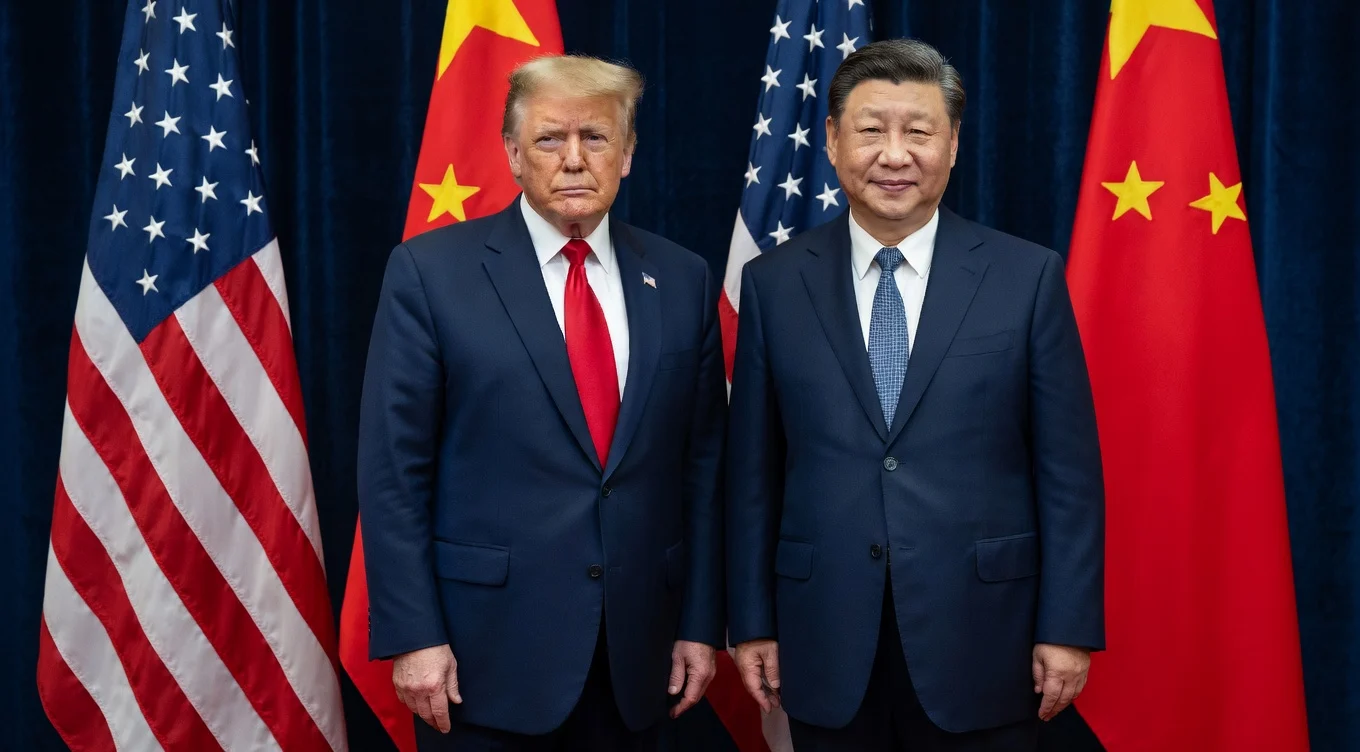
The state dinner scheduled for September 24 will feature a distinguished guest list including Nvidia’s Jensen Huang, OpenAI’s Sam Altman, Apple Executive Chairman Tim Cook, and Qualcomm’s Cristiano Amon, Bloomberg has reported.
This high-profile gathering takes place within the context of extensive bilateral discussions between Washington and Beijing, covering trade policy, artificial intelligence innovation, and broader economic collaboration.
Technology matters are anticipated to dominate conversations as the planet’s two leading economies navigate competitive tensions in AI development while simultaneously exploring potential partnership opportunities.
Leading Tech Executives Converge at White House Event
Nadella’s expected participation brings Microsoft into a prestigious assembly of American technology powerhouses represented at the diplomatic event.
Microsoft has chosen not to provide official commentary on the Bloomberg report.
The attendance roster featuring executives from Nvidia, OpenAI, Apple, and Qualcomm positions companies at the forefront of AI processors, intelligent software platforms, consumer electronics, and wireless communications technology at this significant diplomatic occasion.
This gathering follows recent public statements from Anthropic CEO Dario Amodei advocating for more measured progress in artificial intelligence development.
Amodei has raised concerns that the acceleration of AI capabilities may outpace the implementation of adequate safety mechanisms needed to manage associated risks.
OpenAI’s Sam Altman has voiced agreement with adopting enhanced precautionary measures, whereas Nvidia’s Jensen Huang has maintained opposition to development slowdowns.
The current administration has similarly dismissed recommendations for comprehensive restraint on American AI innovation.
President Trump has maintained that curtailing the velocity of US artificial intelligence research could enable Chinese firms to narrow the technological advantage currently held by American enterprises.
Beijing has likewise pushed back against alarmist perspectives on AI advancement, characterizing certain warnings as disproportionate to actual threats.
Washington and Beijing Explore AI Communication Framework
The upcoming state dinner occurs as American and Chinese government representatives evaluate the creation of a specialized communication mechanism dedicated to artificial intelligence matters.
Treasury Secretary Scott Bessent conducted meetings with Chinese Vice Premier He Lifeng in New York this past Sunday in preparation for the Trump-Xi bilateral summit.
Bessent indicated that both nations explored the establishment of a formal US-China AI dialogue structure.
The contemplated framework could incorporate an alert mechanism for AI-related developments that escalate to national security significance.
Bessent suggested that enhanced bilateral communication between the world’s dominant AI nations could strengthen transparency regarding mutually relevant risks.
Chinese official media characterized the preliminary discussions as forthright and productive, acknowledging that artificial intelligence topics featured in the agenda.
Both delegations committed to maintaining ongoing diplomatic engagement.
President Trump and President Xi are scheduled to convene at the White House on Thursday.
Trade relations and investment policies are expected to receive substantial attention during the summit, along with discussions concerning tariffs, strategic mineral resources, and artificial intelligence governance.
This diplomatic engagement unfolds as competitive dynamics between American and Chinese technology corporations intensify across AI model development, semiconductor manufacturing, and computational infrastructure.
Currently, the proposed AI dialogue framework remains in preliminary planning phases, while the September 24 state dinner will convene several of America’s most powerful technology executives with leadership from both national governments.
Get 3 Free Stock Ebooks
Discover top-performing stocks in AI, Crypto, and Technology with expert analysis.
- Top 10 AI Stocks - Leading AI companies
- Top 10 Crypto Stocks - Blockchain leaders
- Top 10 Tech Stocks - Tech giants


