



TLDR
- BTC declined 1.7% reaching $83,061 on Monday, breaking a two-week winning streak.
- The U.S. 10-year Treasury yield surged beyond 5%, marking its highest point in nearly two decades.
- President Trump left the door open for additional military operations against Iran ahead of midterm elections.
- A seven-day ceasefire proposal from Iran involving the Strait of Hormuz was turned down by the White House.
- Major altcoins like Ether, XRP, Solana, and Cardano experienced similar downward momentum.
The leading cryptocurrency by market capitalization experienced a notable pullback on Monday, with BTC sliding 1.7% to reach $83,061 as of 6:30 GMT. This downturn marks the end of a two-week rally that had lifted investor sentiment.
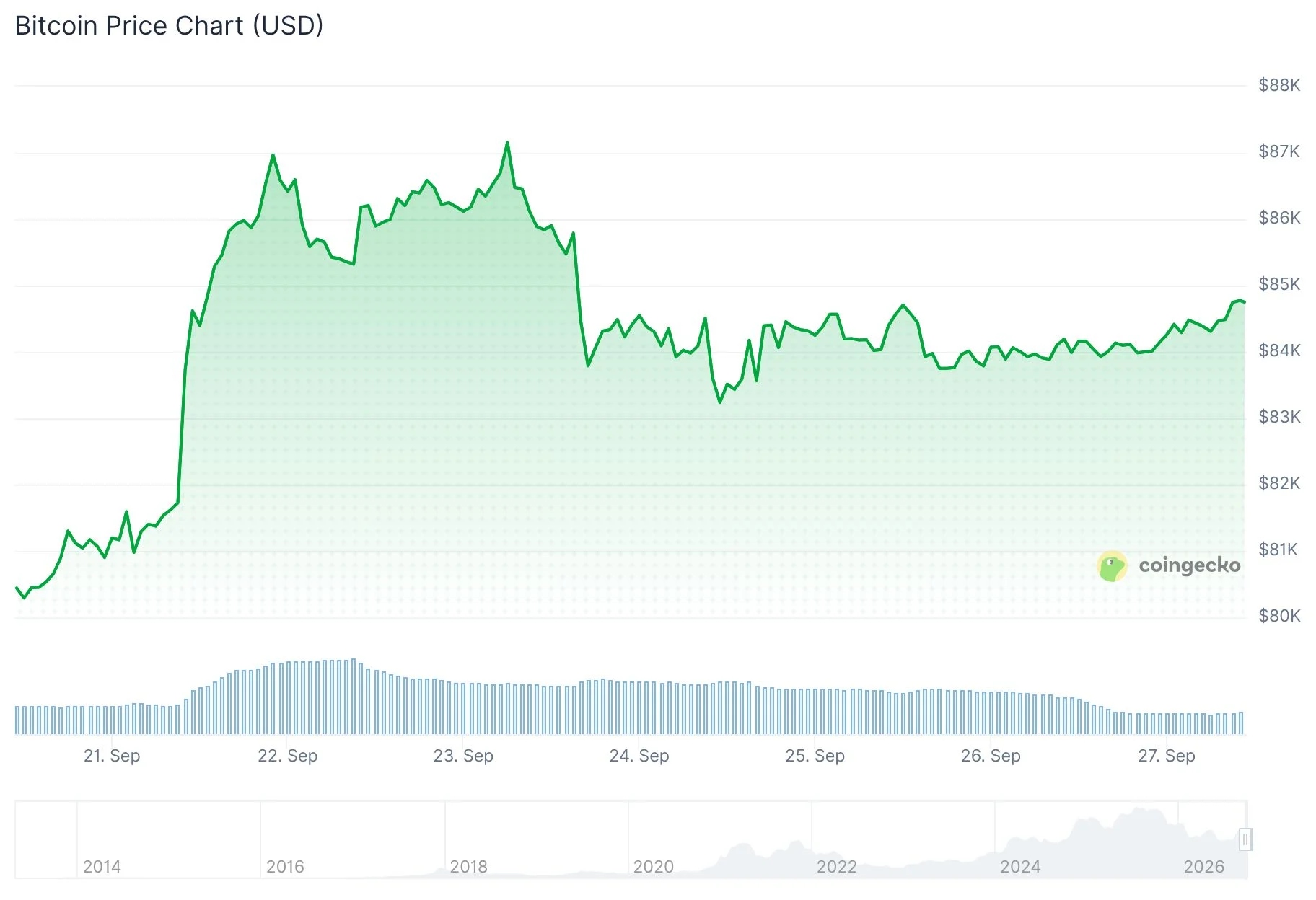
The selloff occurred against a backdrop of soaring Treasury yields and persistent geopolitical friction involving the United States and Iran. These macroeconomic headwinds dampened risk appetite throughout financial markets, with digital assets bearing the brunt.
Treasury Yields Reach Multi-Decade Peaks
Sovereign debt yields climbed globally on Monday as market participants priced in prolonged monetary tightening by major central banks combating stubborn inflation.
The benchmark 10-year U.S. Treasury note pushed above the 5% threshold, a milestone not witnessed since the pre-financial crisis era of 2007. Meanwhile, Japanese government bonds also breached three-decade highs.
Both the Federal Reserve and Bank of Japan implemented rate increases in September, with officials from each institution indicating additional hikes remain on the table as inflationary pressures persist.
Elevated borrowing costs typically create headwinds for speculative assets like cryptocurrencies. Higher rates drain liquidity from markets while simultaneously making traditional fixed-income investments more attractive on a risk-adjusted basis.
Surging energy prices have emerged as a primary inflation catalyst throughout the year. Much of this volatility stems directly from the intensifying standoff between Washington and Tehran.
White House Keeps Military Options Open Against Iran
During weekend remarks, President Trump expressed optimism that hostilities with Iran would conclude shortly. However, he notably declined to rule out further military operations prior to November’s midterm congressional elections.
“I don’t want to say that. I mean, it’s possible, but I just don’t want to say that,” Trump responded when pressed about potential renewed strikes, according to Fox News reporting.
The President emphasized that Washington would maintain maximum pressure through combined military and economic strategies. Iran’s Foreign Minister Abbas Araghchi stated his nation stands prepared for continued confrontation, including what he described as a potential “doomsday war.”
During proceedings at the United Nations General Assembly, Iranian diplomats floated a compromise arrangement. The framework included a seven-day reopening of the strategically vital Strait of Hormuz oil shipping lane, accompanied by a temporary ceasefire and diplomatic negotiations.
The White House rejected the Iranian overture. Trump argued that Tehran only sought negotiations due to mounting pressure, and reiterated via Truth Social that Iran must never be permitted to acquire nuclear weapons capability.
Ongoing conflict has kept crude oil valuations elevated. WTI crude futures advanced nearly 1% to settle at $93.28 per barrel during Monday’s session.
Broader Crypto Market Mirrors Bitcoin’s Weakness
Monday’s downturn in Bitcoin rippled throughout the broader cryptocurrency ecosystem. Market participants appeared to lock in gains following the preceding fortnight of appreciation.
Ether, ranked second by market capitalization, shed 2% to trade at $2,652.25. XRP experienced a 2.7% decline, Solana retreated 2.1%, while Cardano posted a 3.5% loss.
BNB edged down 1.3%. Within the memecoin sector, Dogecoin tumbled 3.8% and the Trump-affiliated token declined 4.4%.
Notwithstanding Monday’s losses, Bitcoin has delivered impressive returns across recent months. The flagship cryptocurrency has appreciated 42% over the trailing three-month period, outpacing traditional benchmarks including the Nasdaq composite and gold.
One cryptocurrency exchange chief executive highlighted the $83,800 to $84,000 zone as a critical support threshold meriting close observation. He additionally identified the $85,000 to $85,800 range as potential resistance should prices attempt to recover.
Market participants are now turning their attention to incoming economic releases scheduled for this week, including U.S. consumer price index data, manufacturing activity indicators, and employment statistics. These reports could significantly influence market expectations regarding the Federal Reserve’s monetary policy trajectory.

